
The complete guide
How to Choose a Silk Sleep Mask That You Will Actually Wear All Night
The problem with the room you sleep in
Very few bedrooms are actually dark. There is light under the door, a glowing power switch, a phone face-up on the bedside table, a street lamp that curtains never quite beat. During the day it is worse. Daylight through a gap in the blinds is many times brighter than anything you get at night, which is why napping feels harder than it should and why anyone working shifts struggles to sleep in the afternoon.
You can fix a room with blackout blinds and a lot of money, or you can fix the few centimetres in front of your eyes with a piece of fabric. A sleep mask is the cheap answer, and if it fits properly it is a very good one. The catch is that most people have owned a bad mask at some point: a thin strap that bit into the back of the head, a stiff panel that pressed on the eyelids, a rough fabric that left crease marks. One bad experience and people write off the whole idea.
That is a shame, because the difference between a mask you tolerate and a mask you forget you are wearing comes down to two things. The fabric that touches your face, and the way the band holds it there.
Why the fabric matters more than people expect
The skin around your eyes is the thinnest on your body, and it moves constantly while you sleep. Every time you turn over, whatever is covering it drags a little. With cotton or a cheap polyester that drag is noticeable, because both fabrics have a surface that catches. Cotton in particular is made of short, slightly rough fibres, so it grips.
Silk works differently. It is a long, continuous filament, which gives it a surface that skin and hair slide over rather than snag on. That is a plain physical property, not a wellness claim. It is the same reason people put silk on their pillows. A mulberry silk sleep mask feels smooth and cool when you first put it on, and it keeps feeling that way as you move through the night.
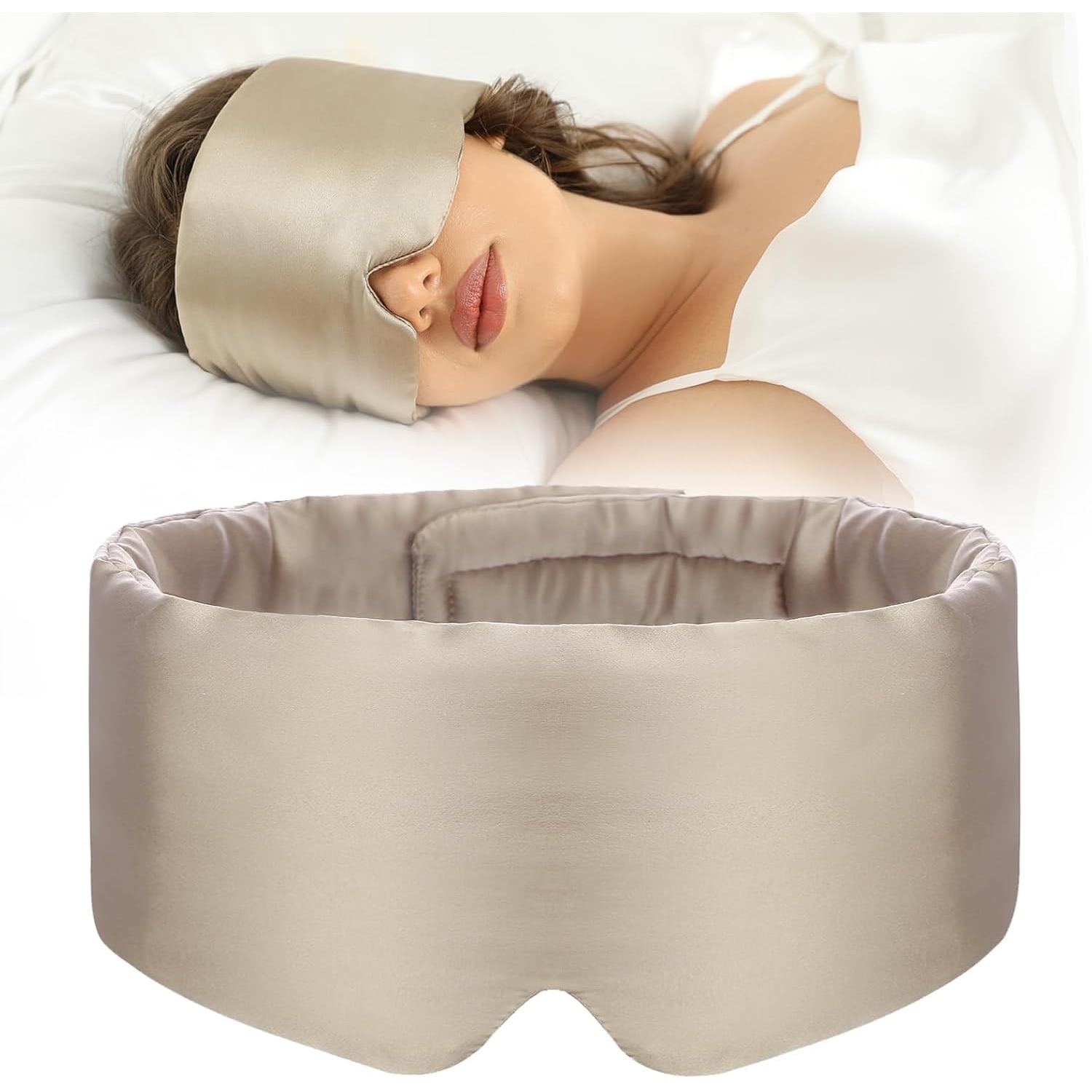
This mask is listed by the maker as 100% mulberry silk, in a solid taupe. Taupe is a useful colour for something that lives on a nightstand or in a bag. It does not look clinical like white, it does not look stark like black, and it does not show every mark the way a pale colour does.
The band is where most masks fail
Think about what a strap actually has to do. It needs to hold a light object against a curved surface, firmly enough that it does not slide when you roll over, loosely enough that you do not wake with a headache. That is a narrow window, and thin elastic is bad at hitting it.
A thin strap concentrates all its tension into a line maybe five millimetres wide. To get enough holding force, it has to pull hard, and that pull lands on one narrow band of scalp and hair. Hence the tugged hair, the dent behind the ear, the ache when you take it off.
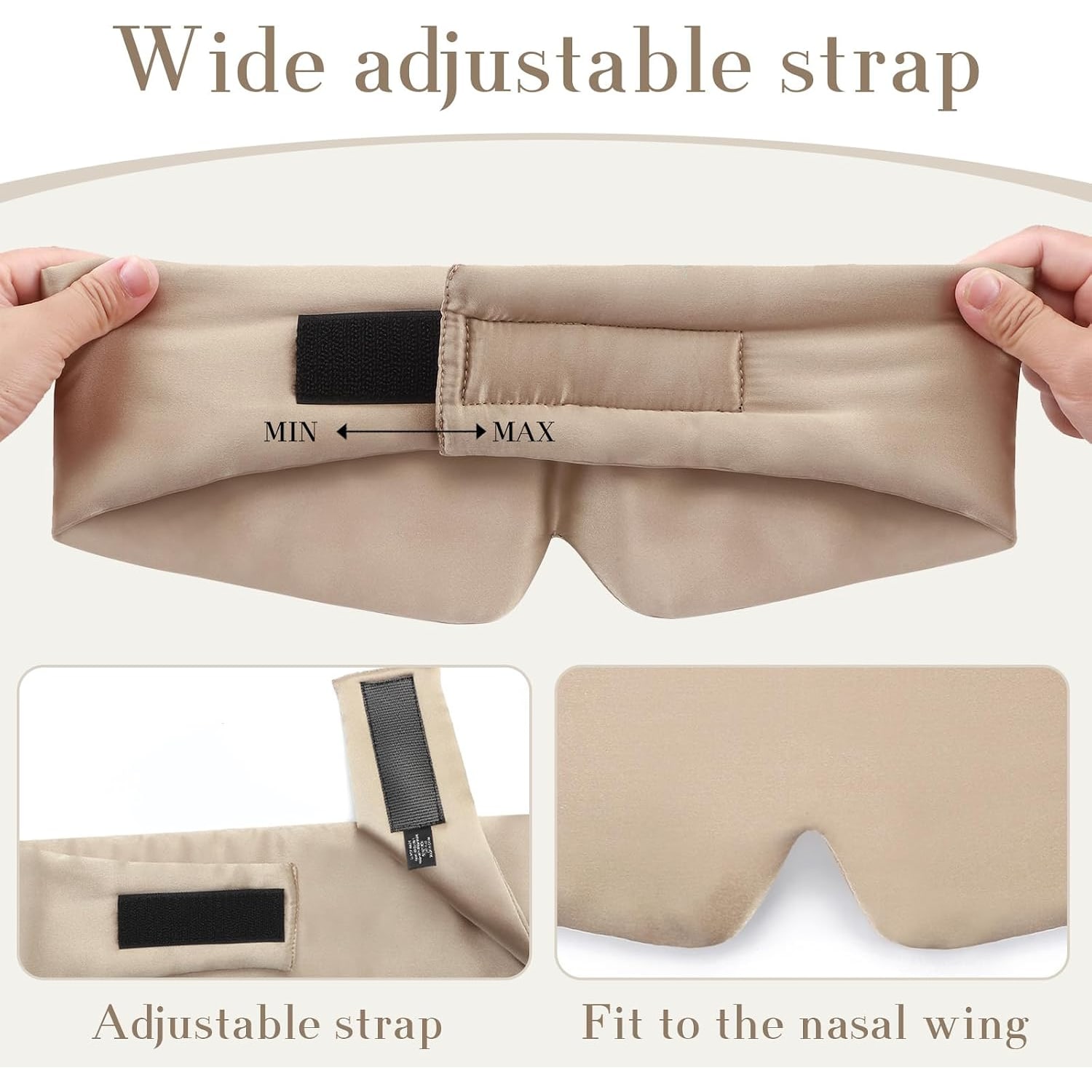
A wide band spreads the same holding force across a much larger area. Less pressure per square centimetre means less to notice. Add a hook and loop fastening and you get something better again, because you set the tension yourself rather than accepting whatever length the elastic was cut to. If it feels tight, you loosen it by a centimetre in the dark without thinking. If it slips, you pull it in.
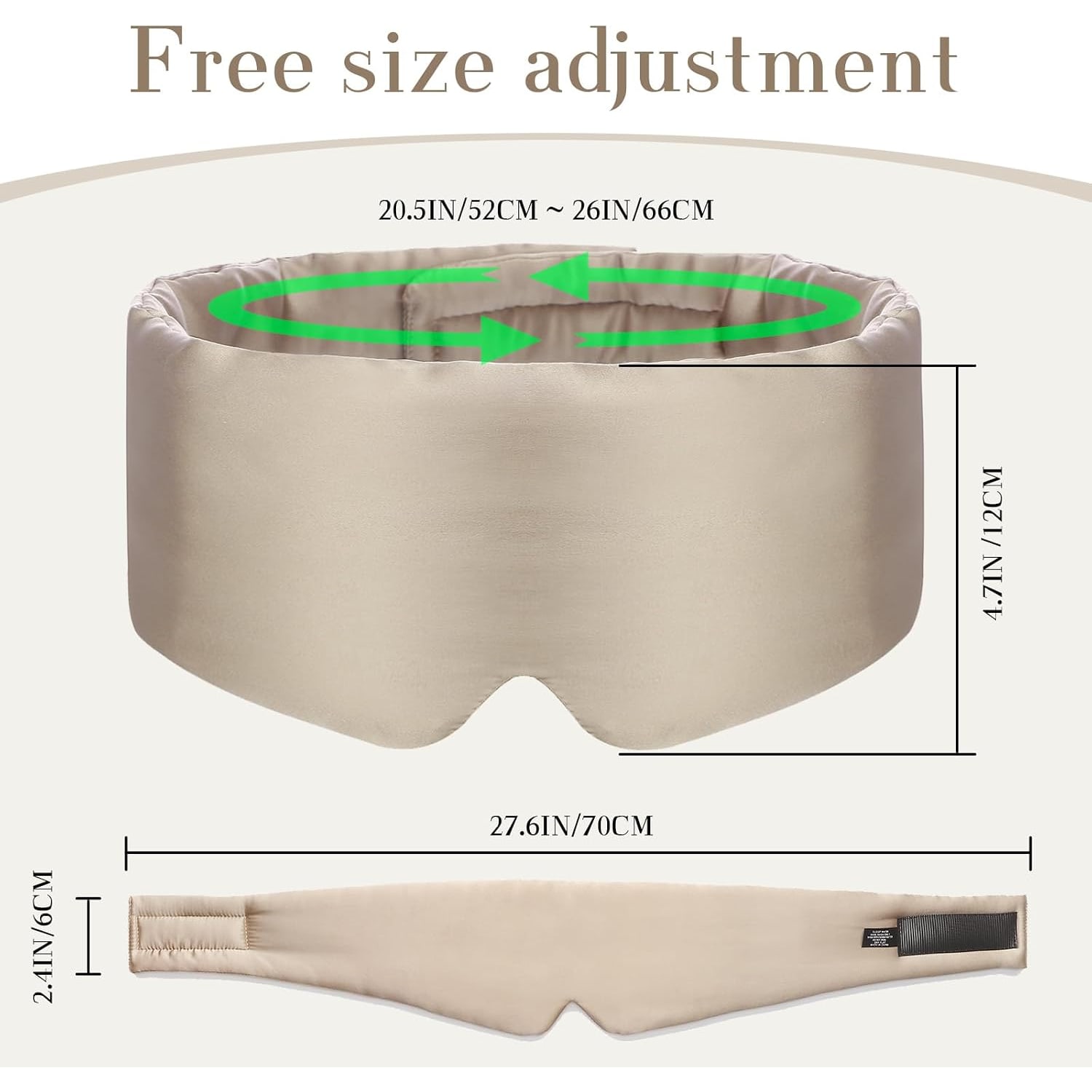
That adjustability is also why one size works for a lot of people. There are no fixed holes to choose between, so you can land anywhere in the range.
Who this suits
Light sleepers who wake at the first hint of morning will get the most out of it. So will anyone sharing a room with someone who keeps different hours, because a mask lets one person read while the other sleeps.
Travellers are the other obvious group. Planes are bright, cabin lights come on at odd times, and window shades are never under your control. A mask that folds flat and weighs almost nothing earns its place in a carry-on quickly. The best silk eye mask for travel is simply the one that is already in your bag when you need it.
Shift workers and new parents sleep during daylight, which is the hardest condition of all. Here, coverage counts. A larger mask gives you more fabric past the outer corners of the eyes and along the nose, which is where light usually finds its way in on smaller designs. This one is cut large for exactly that reason.
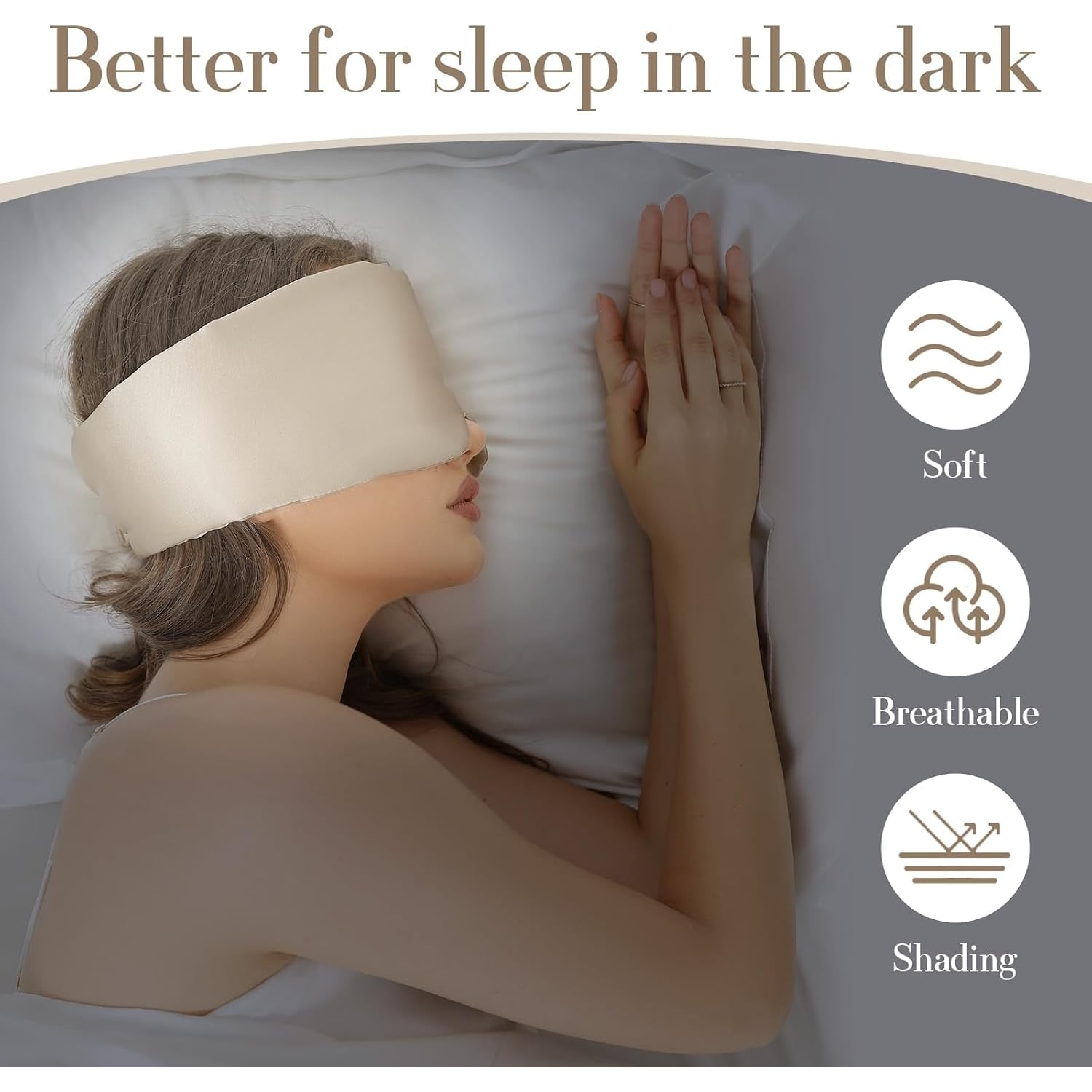
Side sleepers do fine with it too, because there is no hard buckle to press into the pillow.
How to choose, in practice
Start with coverage. Hold your hand over your eyes and notice how far past the corners you need to go before the light stops bothering you. That is roughly the panel size you want. Small masks look neat and leak light.
Then look at the strap. Width first, adjustability second. If a mask has a thin fixed elastic, assume you will feel it.
Then the fabric. Silk against the face is worth paying for if you move in your sleep or wake with crease lines. If you are shopping for the best wide band sleep mask, you will find plenty of options, but far fewer that pair the wide band with a silk face.
Finally, think about how you will store it. A mask kept loose at the bottom of a handbag picks up dust and lint, and a hook and loop fastening left open will grab every loose thread it meets. Close the fastening and keep the mask somewhere contained, even if that is just a zip pocket.
Looking after it
Hand wash only. That is the maker's instruction and it is the right one for silk. Use cool water and a small amount of gentle detergent, swirl rather than scrub, and give it a minute rather than a soak.
Do not wring it out. Twisting silk stresses the fibres and is the fastest way to make a smooth fabric look tired. Instead, lay the mask on a towel, roll the towel up, and press. Most of the water leaves in one go.
Dry it flat, at room temperature, away from direct sun. Sun fades colour and heat is hard on the fibre. No tumble dryer and no hair dryer.
Close the hook and loop fastening before washing and before packing. Those tiny hooks will find the silk if you let them, and once they pull a thread you cannot undo it.
Wash every week or two for nightly use, and more often if you wear skincare to bed. Skipping fabric softener is fine; silk does not need it and the residue does not help.
The short version
A sleep mask only works if you keep it on. This one is built around that idea. The face is 100% mulberry silk, so it slides over skin instead of catching. The band is wide and fastens with hook and loop, so it holds without digging in and you set the tension yourself. The cut is large, which gives you more coverage where light usually leaks.
The colour is a calm taupe that suits most rooms and most bags. Care is simple, as long as you hand wash it and dry it flat. Beyond that, there is not much to think about, which is rather the point. Put it on, and the room goes dark.