
The complete guide
How To Choose And Wear A Small Square Silk Scarf
The problem a small square solves
Most wardrobes have a gap that is hard to name. You own clothes that fit and colours that work, and somehow the whole thing still looks unfinished when you catch it in a window. It is rarely a missing garment. It is usually a missing bit of colour near the face.
A small square silk scarf fixes that faster than anything else you can buy. It costs less than a jacket, it takes up no space, and it changes the read of a plain shirt in the time it takes to tie a knot. A 21 inch square is the size that does this best. Bigger squares have to be folded and refolded until they sit flat, and by then you have lost the print. Smaller ones end up as a thin strip with nothing to show.
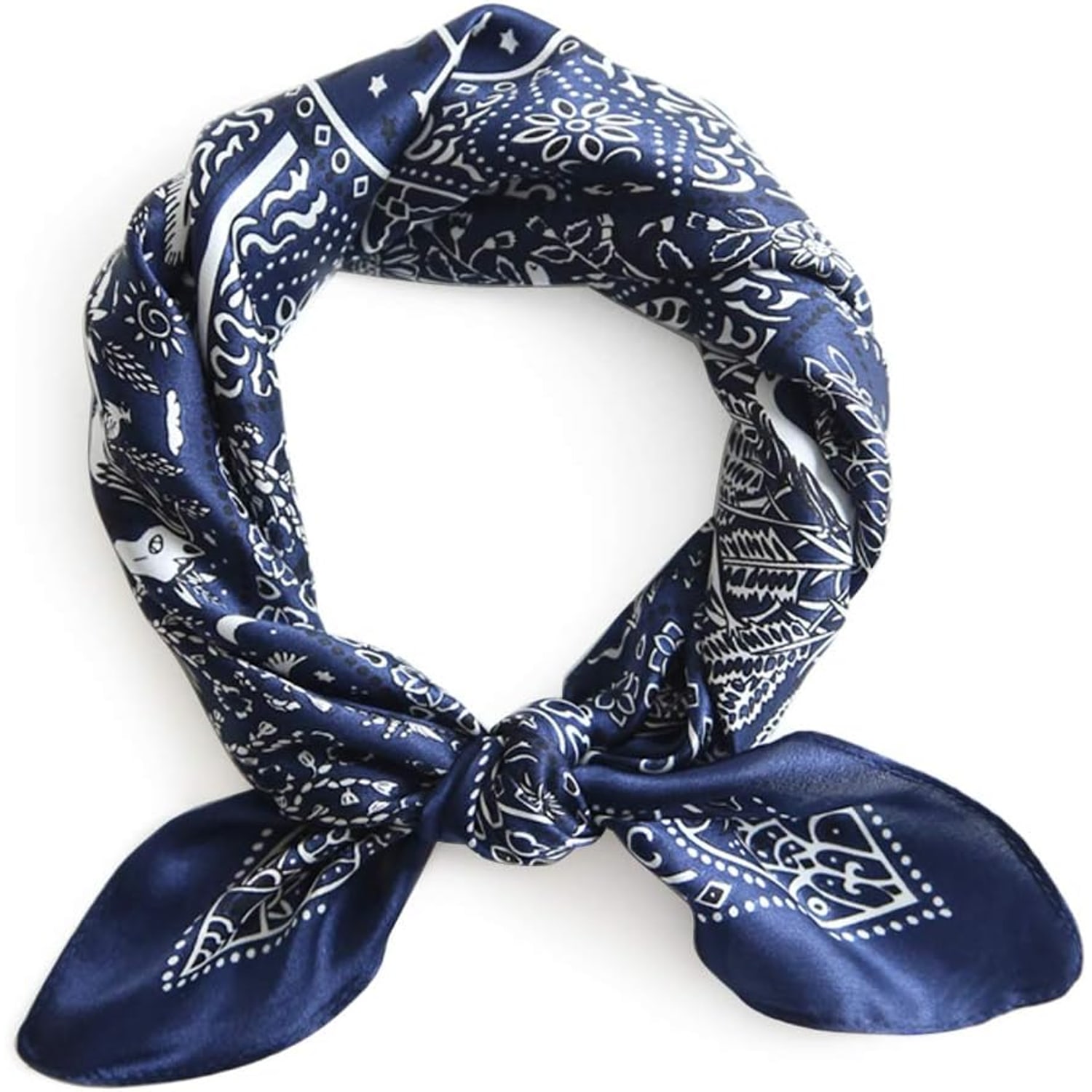
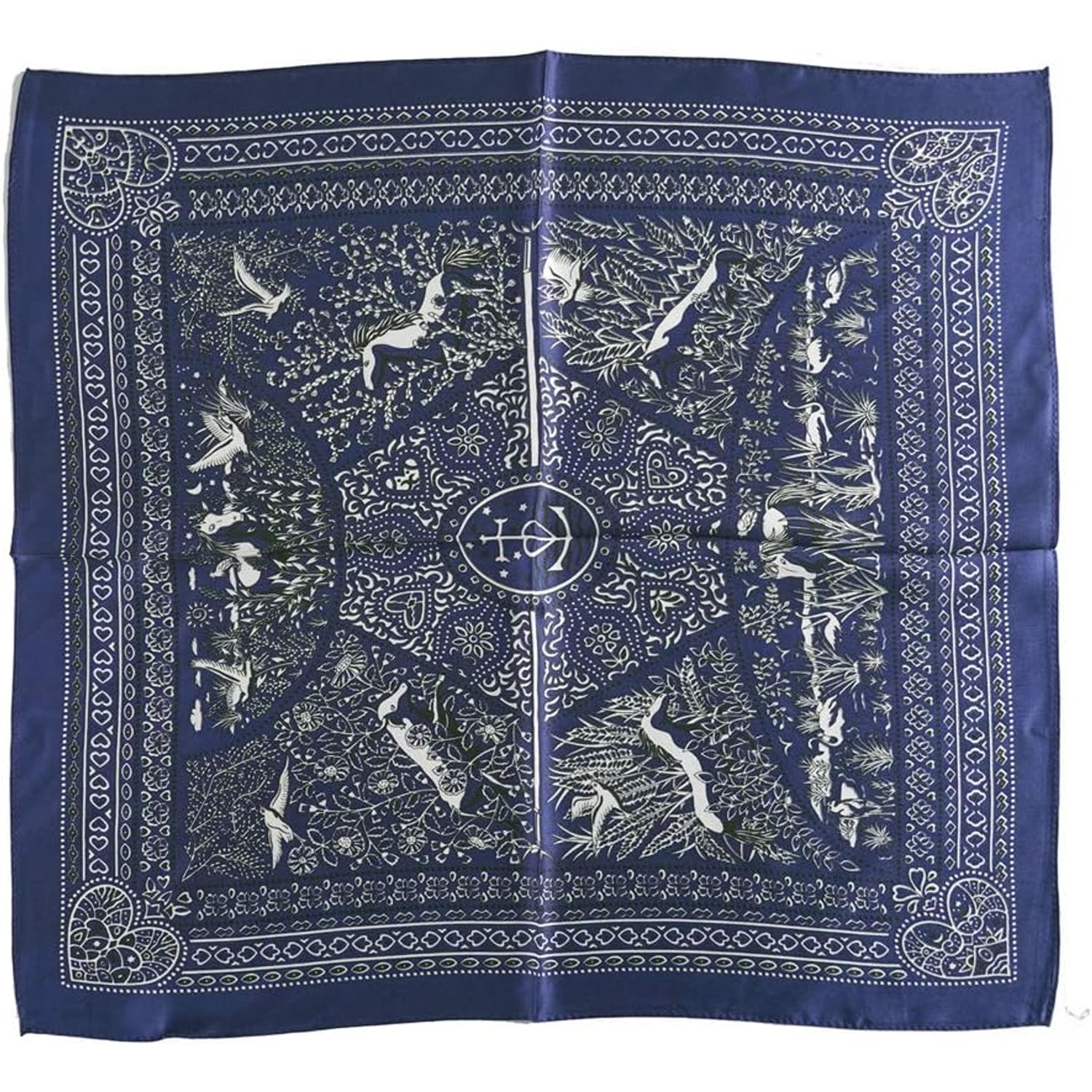
This one is 100% mulberry silk, printed on one face in a blue floral, and cut at 21 inches (about 53 centimetres) on each side.
Why mulberry silk behaves the way it does
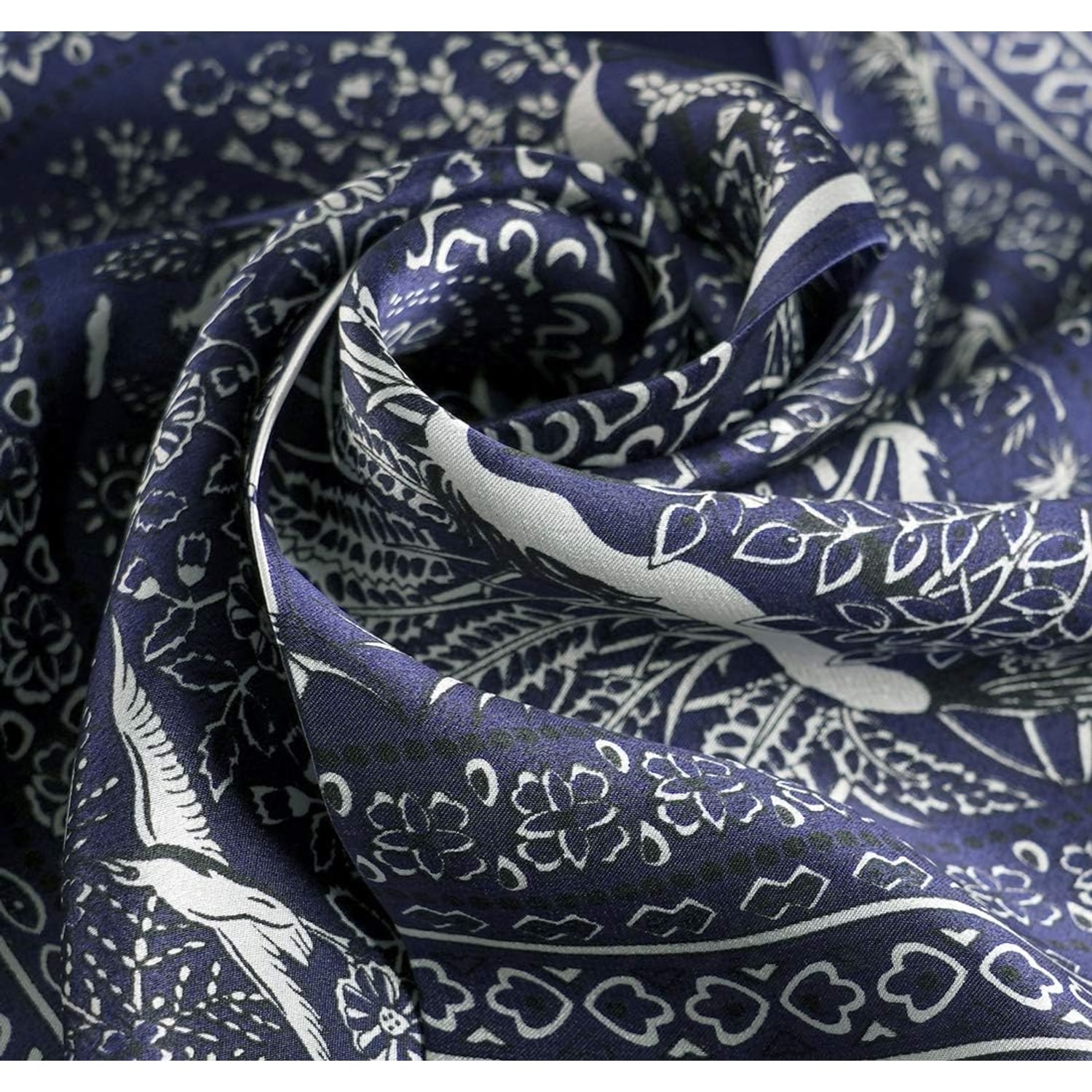
Silk gets talked about as a luxury and that language hides what it actually does. Mulberry silk is reeled from long, continuous filaments rather than short staple fibres. Long filaments mean a smooth surface with very few loose ends poking out, which is the reason a good silk square feels slick rather than fuzzy and why it reflects light in a soft band instead of a flat matte.
For a scarf, that smoothness has practical results. The fabric drapes instead of standing away from the body. It sits flat under a shirt collar. It does not grab at a knitted top the way a loose-weave cotton scarf does. And when you untie it at the end of the day, it falls back out of shape rather than keeping every bend.
The trade is that silk is fussier about heat, sunlight and harsh detergent than cotton is. That is a care question, not a durability question. Silk squares routinely outlast decades of wear when they are washed gently.
Reading the size properly
Scarf sizes confuse people because the number is usually one edge of a square, not the diagonal. A 21 inch square has a diagonal of around 30 inches, which is the length that actually matters when you fold it corner to corner and wrap it.
That diagonal is enough to go once around most necks with a knot and two short tails. It is not enough to go twice around, and it is not enough to cover shoulders. If you want a scarf that drapes over a top or doubles as a light shawl, you want something closer to 35 inches square or a long rectangle instead.
Where the 21 inch square wins is versatility in small places. Neck, wrist, hair, hat band, bag handle. A best square scarf for women tends to be exactly this size for that reason, and it is also the size most likely to get used every week rather than twice a year.
Four ways to tie it
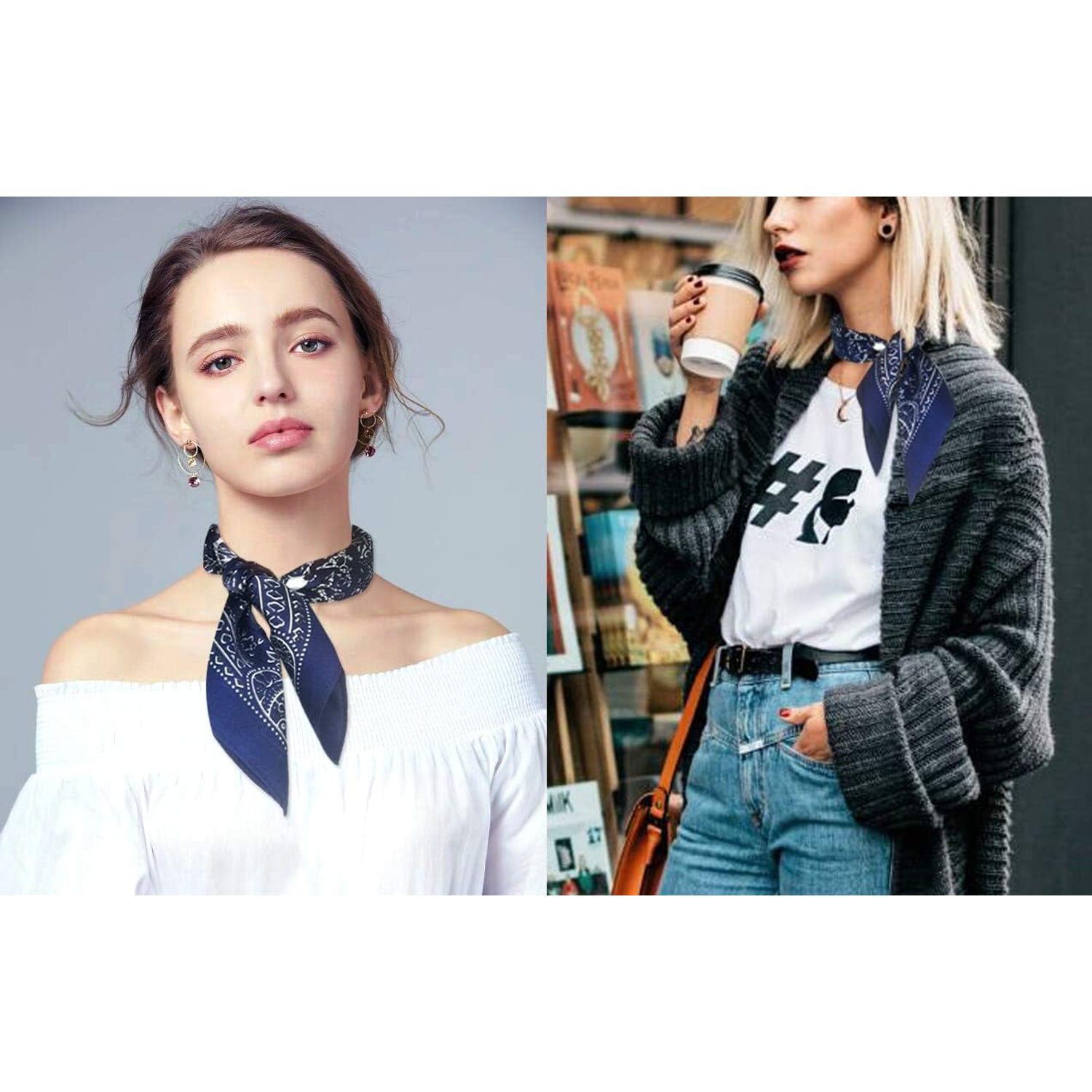
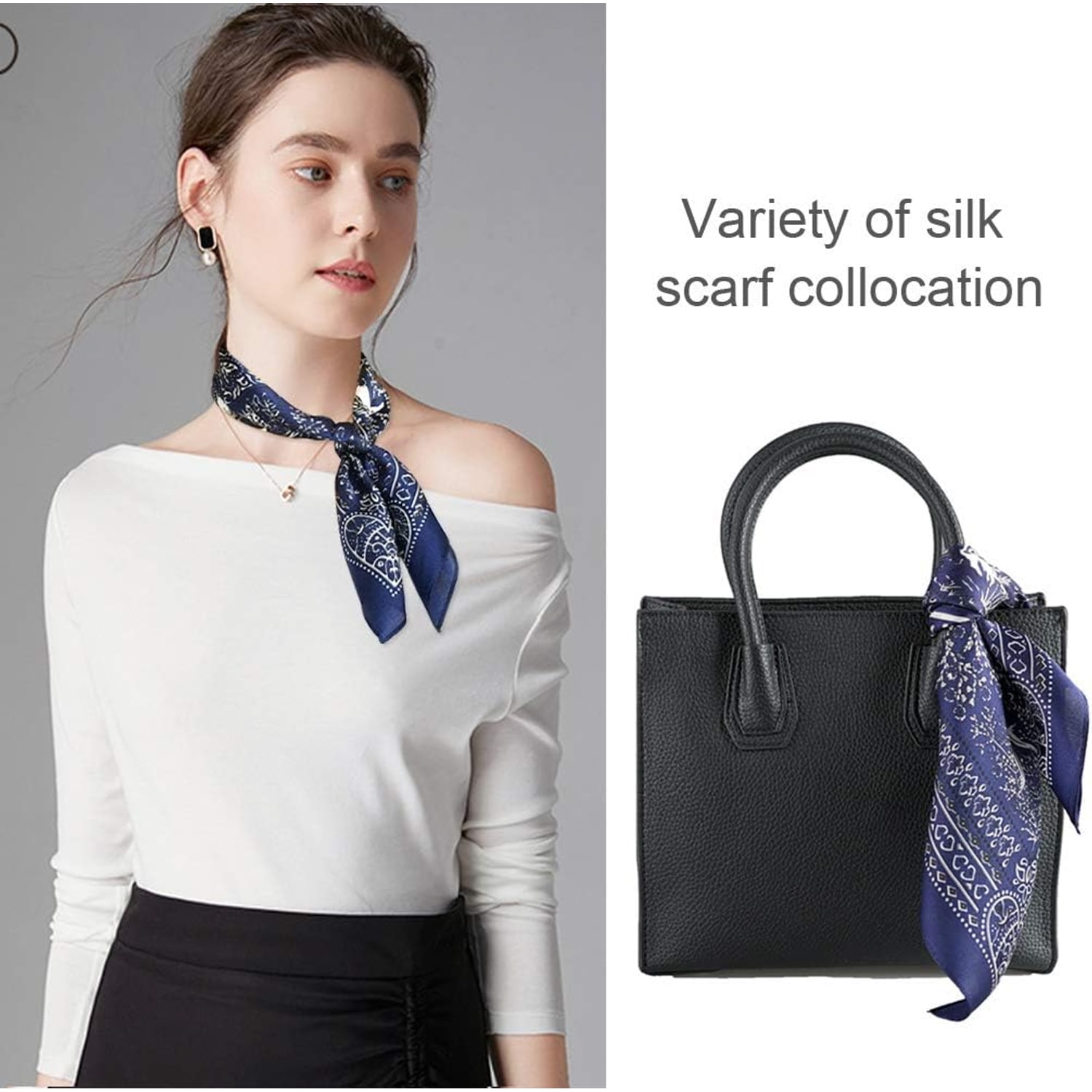
The rolled neckerchief. Fold the square into a triangle, then roll the long edge towards the point in three or four turns until you have a thick band with a small flap. Put it around the neck, knot it at the front, and turn the knot to one side. This is the version that shows the most print.
The flat triangle. Fold corner to corner, lay the triangle over the chest with the point down, take the two ends behind the neck and knot them. Wear it with an open collar so the point shows. This takes more print but sits less neatly under a jacket.
The narrow band. Roll the whole square into a long thin strip. Tie it around a ponytail, a bun, a hat brim or a wrist. A best silk hair scarf is usually a square rolled this way rather than a purpose-made hair tie, because you control the width.
The bag knot. Fold into a band, loop it once through the base of a bag handle, and tie a simple knot with the tails hanging. Nothing to learn, and it protects the handle from hand oils.
Single-side printing, and why it is fine
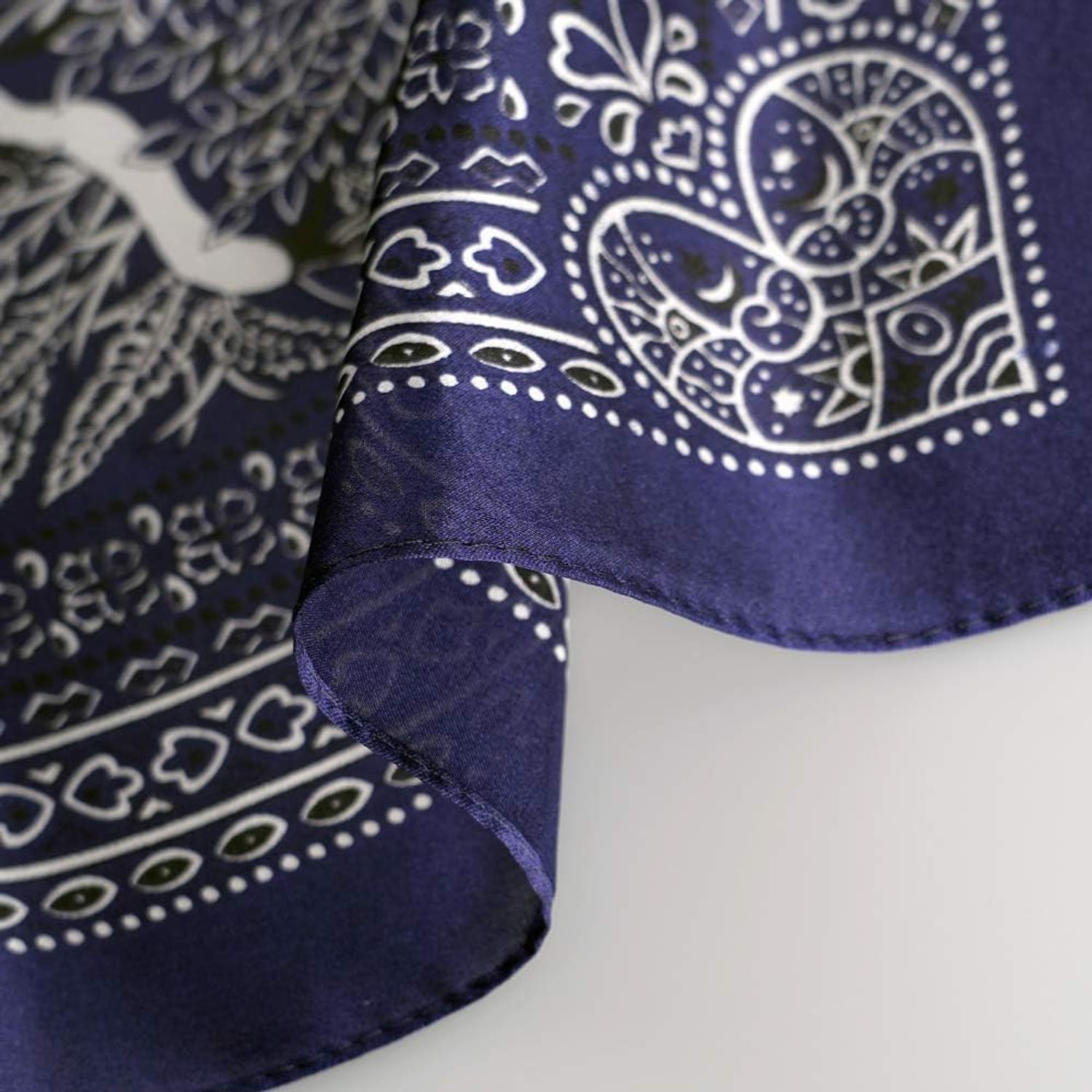
This scarf is printed on one face. The front shows the full depth of the blues, and the reverse shows a paler, softer version of the same pattern. Some shoppers see that and assume it is a shortcut, but single-side printing is standard for lightweight silks. Printing both faces on thin silk needs a heavier base cloth, which changes the hand and the drape.
In practice, the way you tie a square hides most of the reverse anyway. The rolled neckerchief shows almost none of it. The flat triangle shows the back of the point, which reads as a tonal lining rather than a mistake.
If you want a scarf that looks identical from either side, look for a heavier silk twill described as double-sided. If you want something light that knots small and sits flat, a single-side printed square like this one is the better buy.
Who it suits
It suits someone who wears a lot of plain colours and wants a quick way out of that. It suits people who work in offices where a jacket is expected and personality has to come from accessories. A best office silk scarf is small, calm at a distance and interesting up close, which a blue floral manages well.
It suits travellers, because it weighs ounces and gives you a second version of the same outfit. It suits anyone buying a present for someone whose size they do not know, since a scarf has no sizing to get wrong.
It is less suited to anyone wanting warmth. This is a light silk square, not a winter wrap. It is also not the right pick if you want something you can throw in a washing machine without a thought, because the care is hand wash only and that instruction is worth following.
Looking after it
Wash it by hand in cool water with a small amount of mild detergent, the kind sold for wool and delicates. Swirl rather than scrub. Do not soak it for long stretches and do not use bleach or anything with optical brighteners.
Rinse in clean cool water until the water runs clear. Lay the scarf on a towel, roll the towel up, and press. Never twist or wring silk, since that is what breaks the filaments and leaves permanent puckering.
Dry it flat or over a line in the shade. Sunlight fades printed silk faster than washing does. If it needs smoothing, iron on the lowest silk setting on the reverse while it is still a little damp, or press it under a cotton cloth.
Two small habits help more than anything else. Put perfume and hairspray on before the scarf goes near your neck, and let them dry. And store it loosely folded or rolled rather than hanging on a sharp hook, which can distort one corner over time.
What to check before you buy
Check the size against how you want to wear it. Twenty one inches is a neck, wrist and hair scarf. It is not a shoulder wrap.
Check the print direction. Single-side printing means the front is the show side, so plan your knots around that.
Check the care. Hand wash only is easy enough, but it is a weekly five minutes in the sink rather than a trip through the machine.
And check the colour against the clothes you already own. A blue floral is easy to place against navy, white, grey and denim. It is harder against a strong warm print.
The short version
A 21 inch square of 100% mulberry silk, printed in a blue floral on one face. Light, smooth, easy to knot, and small enough to live in a bag permanently. It will not keep you warm and it will not survive a hot machine wash, but it will finish an outfit faster than anything else of its size. Hand wash it cool, dry it out of the sun, and it will still be doing the job in ten years.