
The complete guide
How to Choose Silk Hair Ties, a Practical Buyer's Guide
The small annoyance nobody talks about
Most people own a drawer of hair ties they do not like. There is the one that is too tight, the one that has gone slack, the one with the metal crimp that catches, and the three that have mysteriously fused together. You keep using them because a hair tie is a two dollar problem and not worth thinking about.
Then you take your ponytail out in the evening and it pulls. That small tug, several times a day, is the thing a smoother tie actually fixes. Not by doing anything clever, just by having a surface that lets hair move instead of holding onto it.
That is the whole case for silk. It is a fine, long fibre with a smooth surface, and when it is woven into a cover for an elastic band, hair slides across it as you tie and untie. Cotton grips. Bare rubber grips harder. Silk does not grip in the same way.
What momme actually tells you
If you have shopped for silk before, you have seen the word momme. It is a weight measure, and it is more useful than most of the marketing on a silk product page.
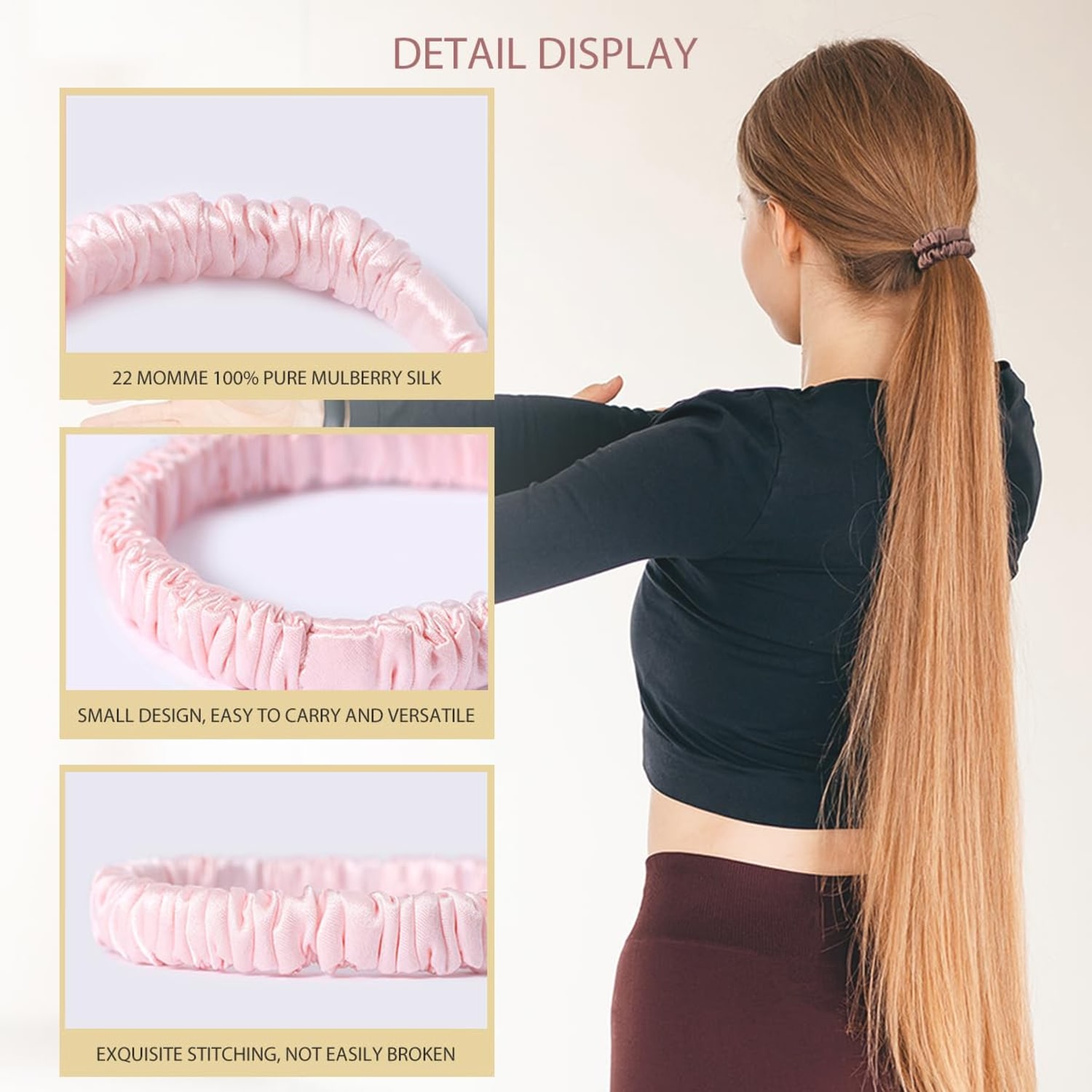
Momme describes how much a given area of silk weighs. A higher number means more silk in the same space, so the fabric is denser. Lightweight silk might sit around 12 or 16 momme. These ties are 22 momme, which is at the heavier end of what gets used in hair accessories and is the same sort of weight people look for in a good pillowcase.
What does that mean in the hand? A heavier silk feels like proper cloth rather than a thin skin stretched over elastic. It holds its shape better when it is stretched and relaxed over and over, and it does not go limp and shiny as quickly. If you are comparing two silk ties and one does not state a momme figure at all, that silence usually tells you something.
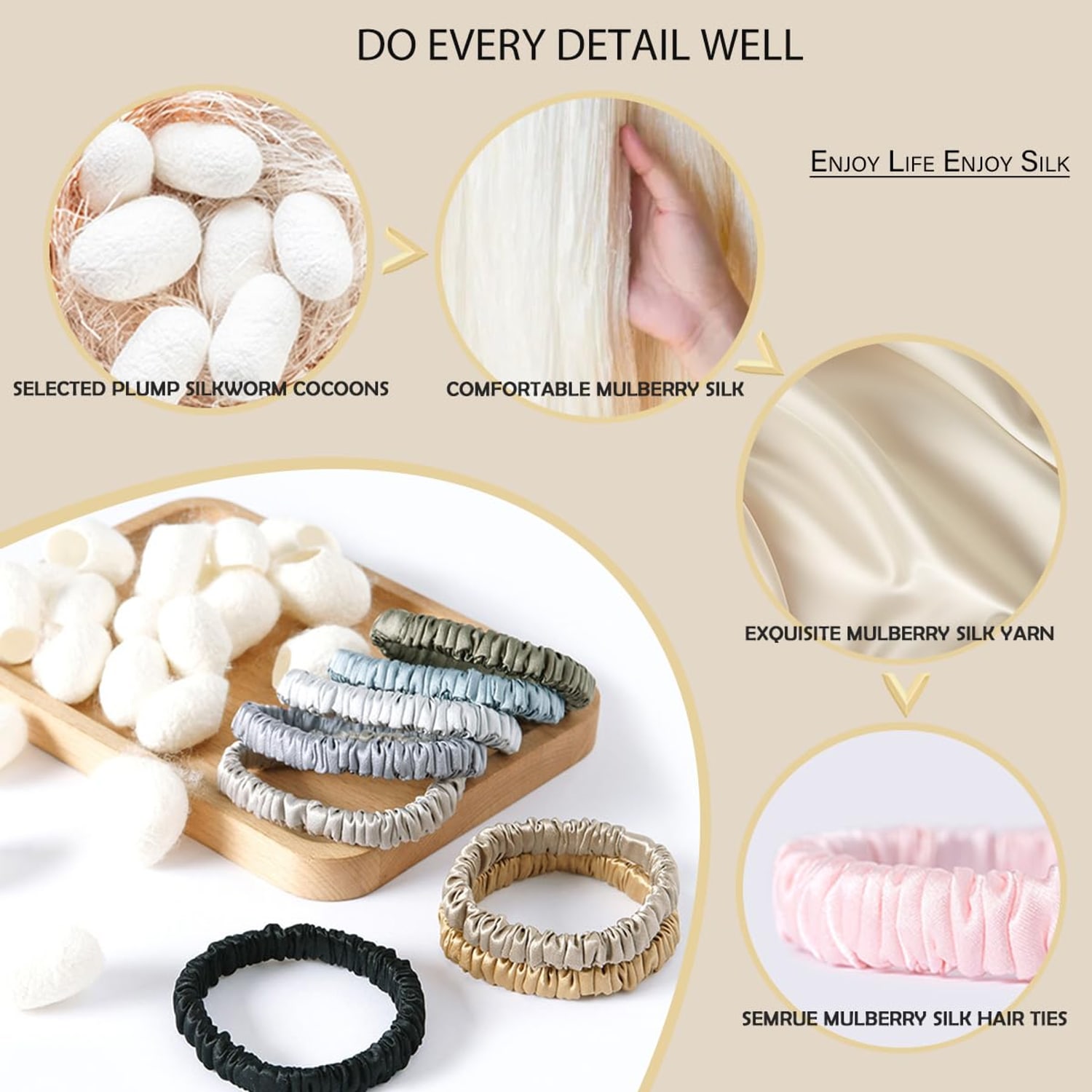
The other thing to check is the type of silk. Mulberry silk comes from silkworms fed only on mulberry leaves, which produces long, even fibres. Long fibres mean a smoother, more consistent yarn. These ties use mulberry silk at 22 momme, which is the combination most people mean when they talk about the best 22 momme silk scrunchies.
How the construction works
A silk hair tie is two parts. There is the stretchy band that does the holding, and there is the fabric cover that sits between that band and your hair.
The elastic is what determines how firm the hold feels and how long the tie lasts. The silk determines how it feels going on and coming off. Both matter, and a tie that gets one right and the other wrong is a frustrating thing to own.
Because the elastic here is wrapped rather than exposed, your hair never touches the rubber. That is the practical difference from a plain band. It also means the tie sits more comfortably on a wrist, which is where most of us park one between uses.
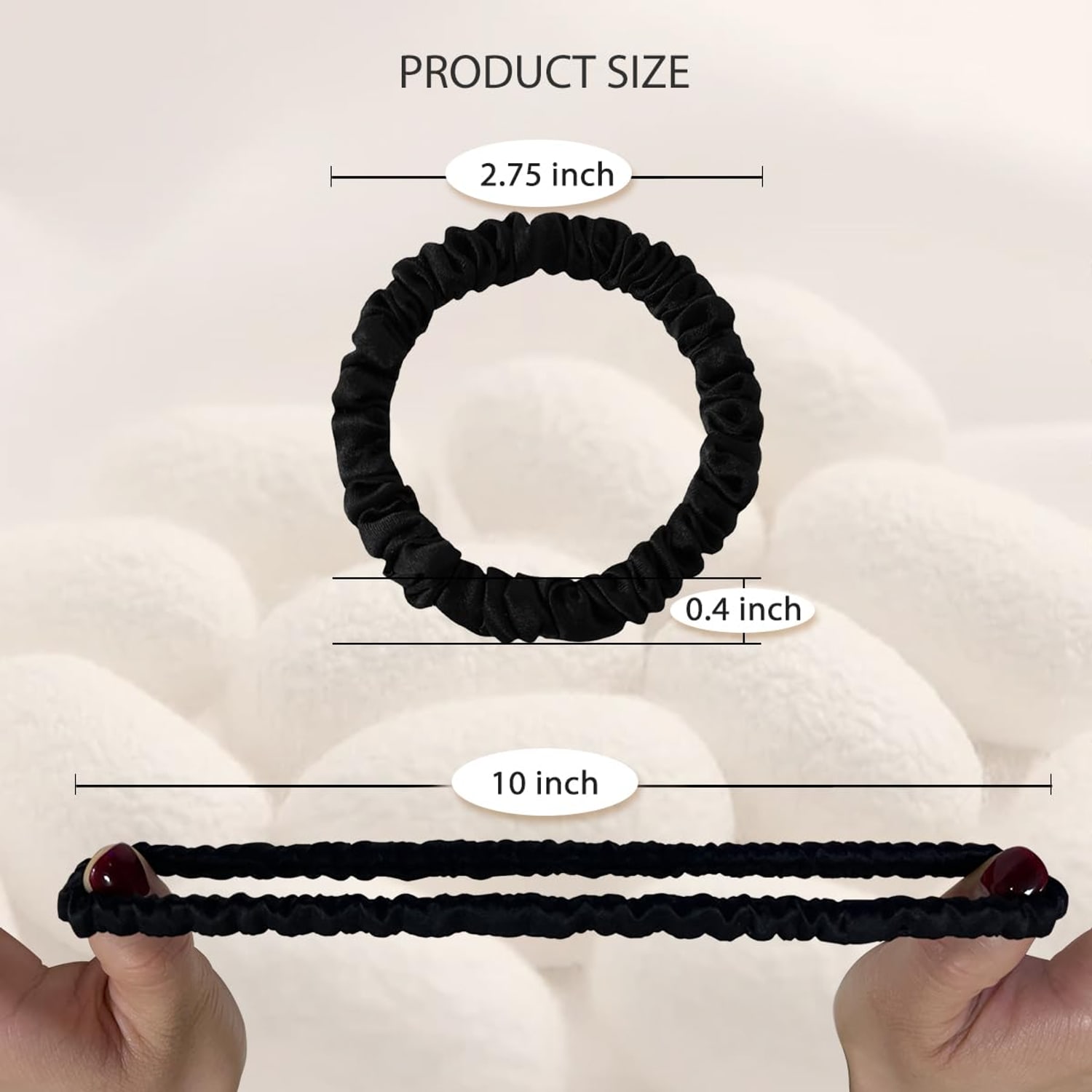
The profile sits between a slim tie and a full gathered scrunchie. You get fabric against the hair without the bulk of a big ruffle, which suits a tidy ponytail or a work bun better than a very decorative scrunchie would.
Matching the tie to your hair
Hair type changes how you use the same tie, more than it changes which tie you should buy.
If your hair is fine, you will wrap two or three times. The smooth surface helps here, because with a textured band those extra wraps are exactly when you feel the pull. People with fine hair often end up searching for the best silk scrunchies for fine hair for this reason, and the answer is usually a smoother cover rather than a tighter band.
If your hair is thick, one loop or one and a half is often all you need, and the elastic takes the strain. Tying a little higher on the head helps distribute weight on a heavy ponytail.
Curly and coily hair benefits from the slide. Curls catch on texture, and a smooth tie comes out of a pineapple or a loose bun with less fuss. Keep the hold gentle and let the elastic do the work rather than cinching down hard.
Straight and freshly washed hair is the one case where a very smooth tie can slip. The fix is an extra wrap, not a different product.
Why colour choice is simpler than it looks
Black and brown cover most of what people need day to day.
Black vanishes against dark hair and dark clothing. It is the default for work, for formal settings and for anything where you do not want the accessory noticed.
Brown is the more forgiving of the two across lighter and warmer hair. It blends with chestnut, auburn, light brown and warm blonde, and it reads softer in a low bun than black does. Against mid-brown hair it practically disappears.
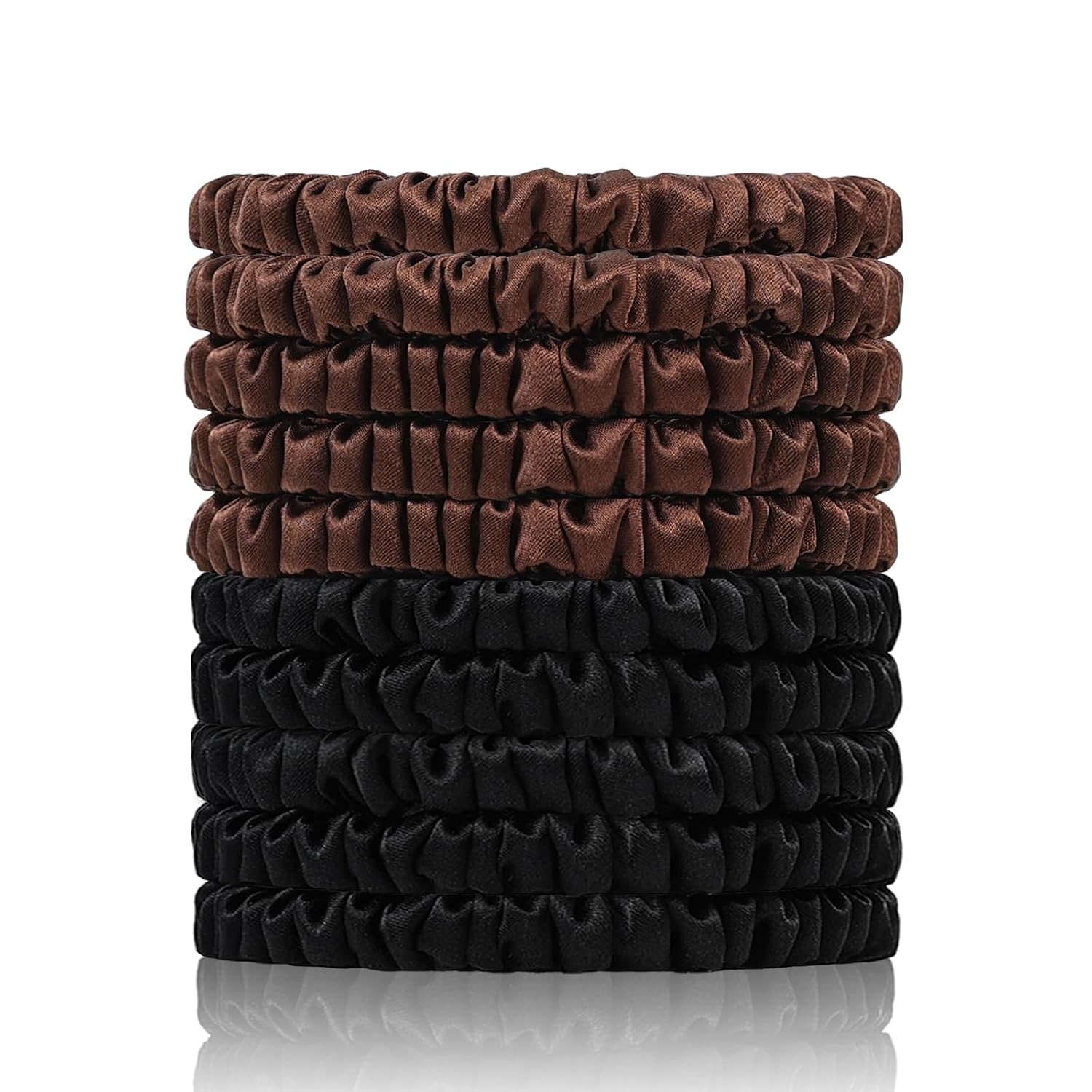
Having both in one pack means you are not guessing. Try each, see which one you keep picking up, and use the other for the gym bag.
Buying several at once
There is a reason hair ties are sold in packs. They are the most losable object in a home, somewhere between a single sock and a lip balm.
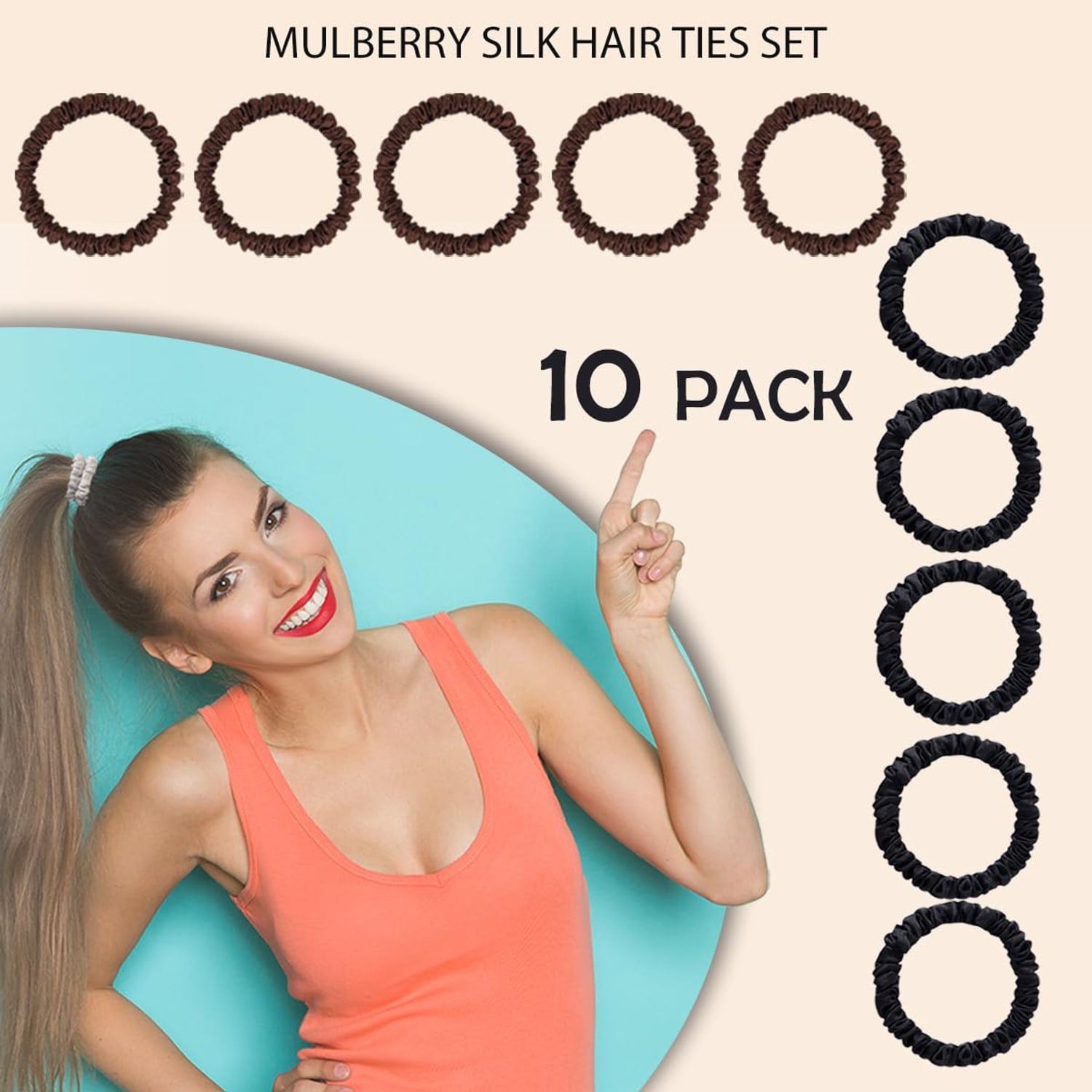
A ten pack lets you distribute them properly. A few in the bathroom, a couple in the handbag, one in the gym bag, one in a suitcase pouch, one in the car. The point is to never be in the position of searching the bottom of a bag with wet hair.
There is a second benefit. Rotating between several ties means no single one gets stretched every day, and elastic that gets a rest lasts longer. If you use the same tie twice daily for a year, it will go slack. Spread that use over ten and the set holds up far better.
A pack also splits. Half of it is still a genuinely useful gift, and a handful of silk ties in a small pouch is an easy thing to hand to a friend or tuck into a Christmas stocking.
Keeping them in good shape
Silk is not difficult, it just dislikes heat and harsh chemicals.
Hand wash in cool water with a mild detergent made for delicates. Swirl the ties rather than scrubbing them, rinse until the water runs clear, then press them in a towel to get the water out. Never wring a silk item, since twisting is what breaks fibres.
Dry flat, at room temperature, out of direct sun. Sun fades dye and heat is the enemy of elastic. Skip the tumble dryer entirely.
Avoid bleach, avoid very hot water, and do not leave them soaking for long periods. If you want to press one flat, use a cool iron on the silk only and keep it away from the elastic.
Two small habits help as well. Take rings off before tying your hair up, since a claw setting can pull a thread in fine silk. And do not stretch a tie hard over a thick watch strap, because repeated over-stretching is what ends an elastic's life early.
How often to wash depends on how you use them. Daily wear, or wear at the gym, means every week or two. With ten in rotation, each one gets plenty of recovery time.
What this pack does not claim
Worth being clear. Silk is smooth, and hair slides over it with less friction than it does over cotton or bare rubber. That is a material fact about the fibre.
We are not telling you it will change your hair, treat your scalp or do anything medical. If a hair accessory page promises you results like that, be sceptical. The honest pitch for silk is comfort and feel, and that is enough on its own.
The short version
These are ten silk hair ties in black and brown, built on 22 momme pure mulberry silk over a stretchy inner band. The momme figure puts the silk at the denser end of the range, so the cover feels like real fabric rather than a thin wrapper.
They suit fine, thick, straight and curly hair, since you simply change the number of wraps. The two colours cover most hair tones and most outfits. The pack size solves the losing problem and lets you rotate so no one tie wears out early.
Hand wash cool, dry flat, keep them out of the sun, and a set like this will serve you for a long time.