
The complete guide
How to Choose a Silk Bonnet That Actually Earns Its Place on Your Head
The problem nobody mentions until it is too late
You can do everything right during the day. Wash with care, detangle slowly, air dry, set your style, protect the ends. Then you lie down, roll over four or five times across six or seven hours, and your hair spends the whole night being dragged across fabric.
Cotton sheets and cotton pillowcases are not smooth at a small scale. The fibres are short, slightly rough, and absorbent. Hair catches on them. Over a night that adds up to a lot of small tugs, and by morning a carefully set style can look like it has been through a wind tunnel. It is not dramatic damage; it is slow, cumulative friction.
A silk bonnet solves the problem from the other direction. Instead of changing your bedding, you simply put your hair inside something smooth and leave the pillowcase out of the equation. The bonnet moves with your head, not against your hair.
What silk actually does differently
Silk is a protein fibre produced by the silkworm, and the filaments are long and continuous rather than short and spun. That is why a finished silk fabric feels slippery rather than fuzzy. Hair laid against it slides instead of grabbing. Nothing mystical is happening; it is just a smoother surface.
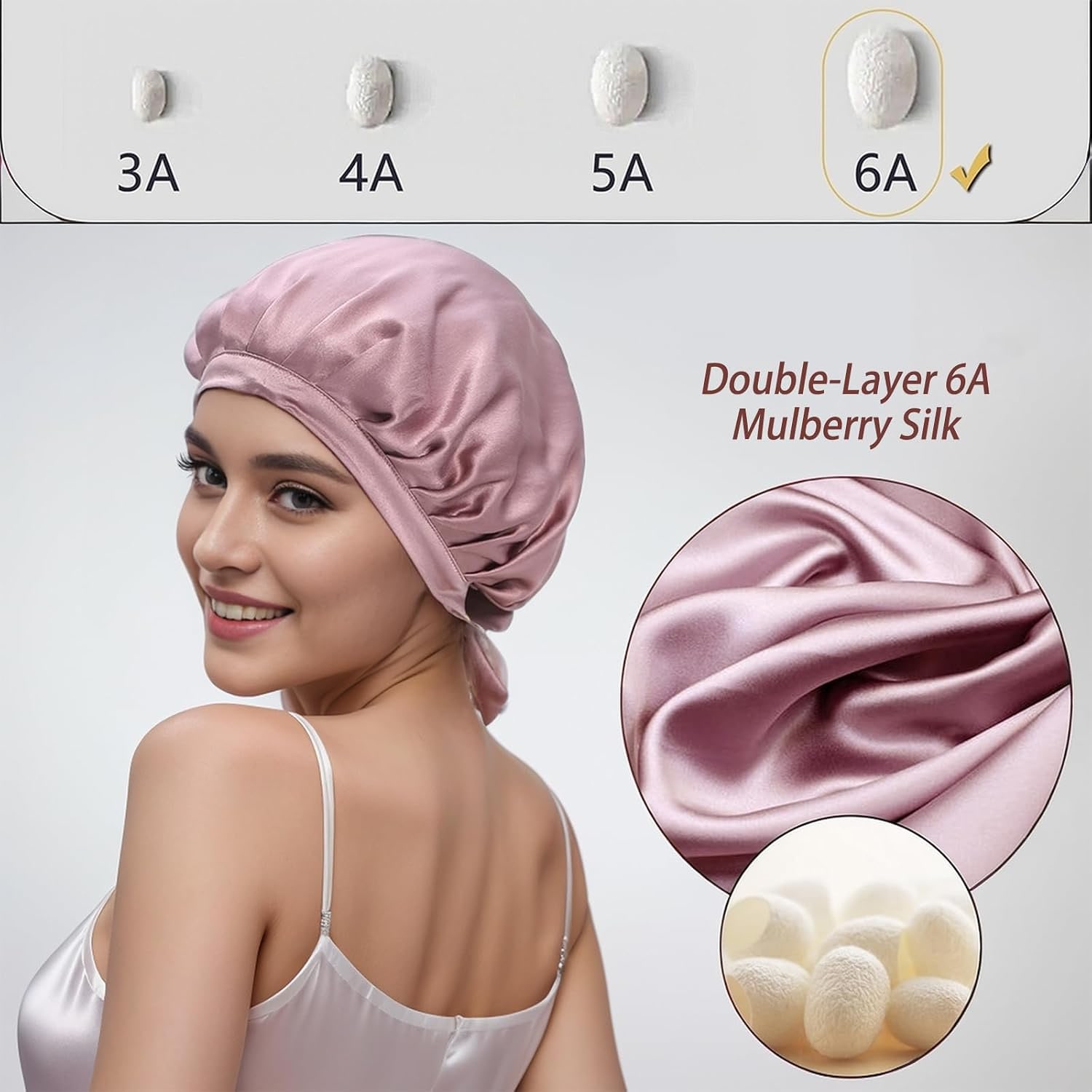
This bonnet is made from 100% pure mulberry silk, which is the grade most people mean when they say "real silk". It is not a satin weave in polyester. Polyester satin can look shiny and feel slick at first, but it is a plastic fibre, it tends to hold warmth, and it loses its hand after repeated washing. Mulberry silk behaves differently and ages better.
Why momme matters
The weight of a silk fabric is measured in momme. Think of it the way you think of thread count for cotton, except it is a weight measure rather than a count. Low-momme silk, say 11 or 12, is thin and translucent and tears more easily. Very heavy silk, 25 and up, has a lot of body but can feel dense for something you wear on your head.
Nineteen momme sits in the useful middle. There is enough weight to give the cloth structure and a proper drape, and enough lightness that it does not feel like you are wearing a hat. For a bonnet, this is the weight most people settle on after trying a few.
The double layer
A single-layer bonnet often has a silk outer and something else inside, or it has just one thin layer of silk that collapses onto the scalp. This one is doubled, so there is silk facing in and silk facing out. Two practical results follow.
First, the inside surface is genuinely silk, with nothing else touching your hair. Second, the bonnet keeps a bit of volume. That matters more than people expect. If a bonnet flattens, long hair gets pressed down and curls lose their shape. A bonnet with some loft gives hair a space to sit in.
The tie band versus elastic
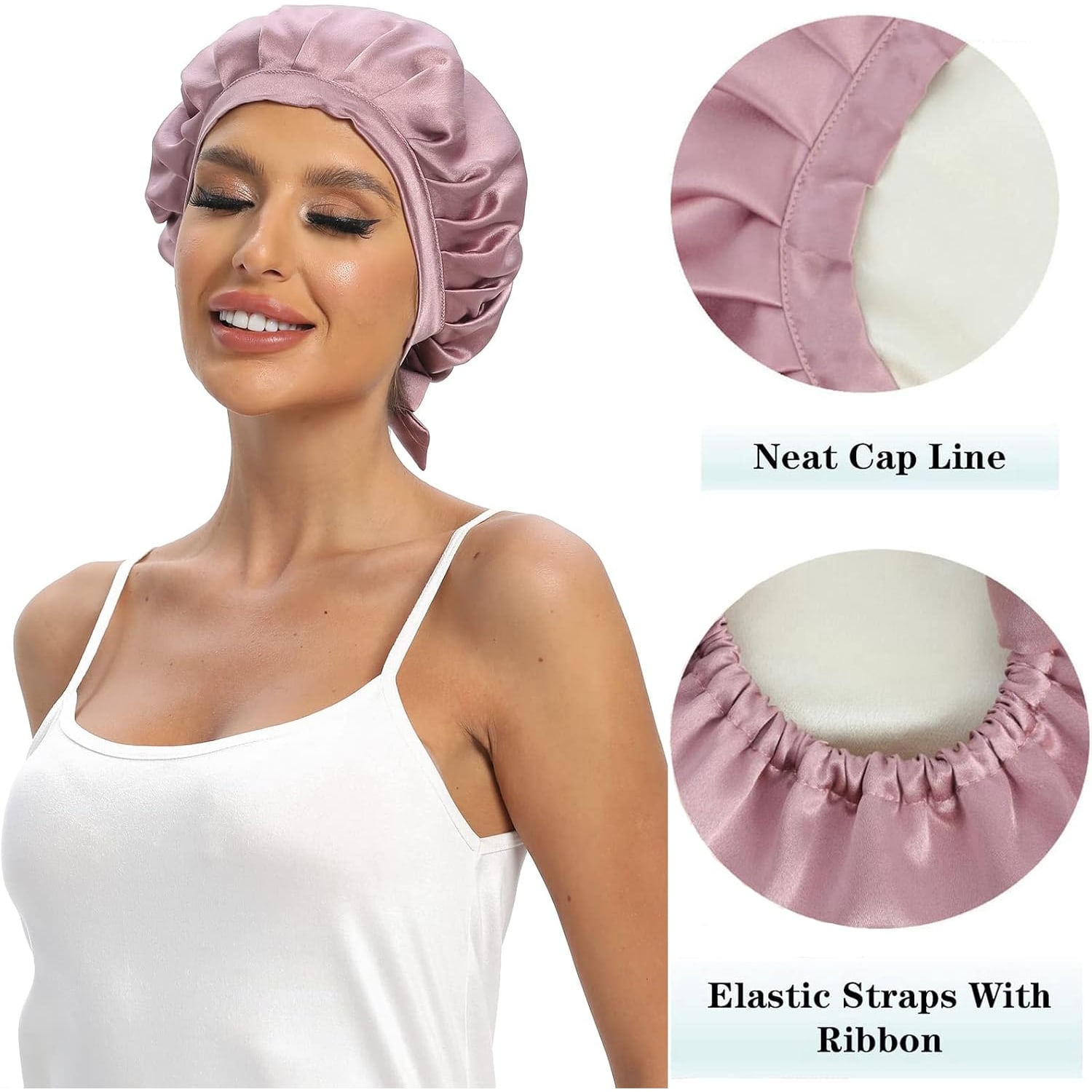
Most bonnets close with a sewn-in elastic band. It is cheap to make, it works, and it has two well-known problems. If it is tight, it presses a line into your forehead and can feel like a headache waiting to happen. If it is loose, or if the elastic has relaxed after a few months, the bonnet slides off at two in the morning and you find it on the floor.
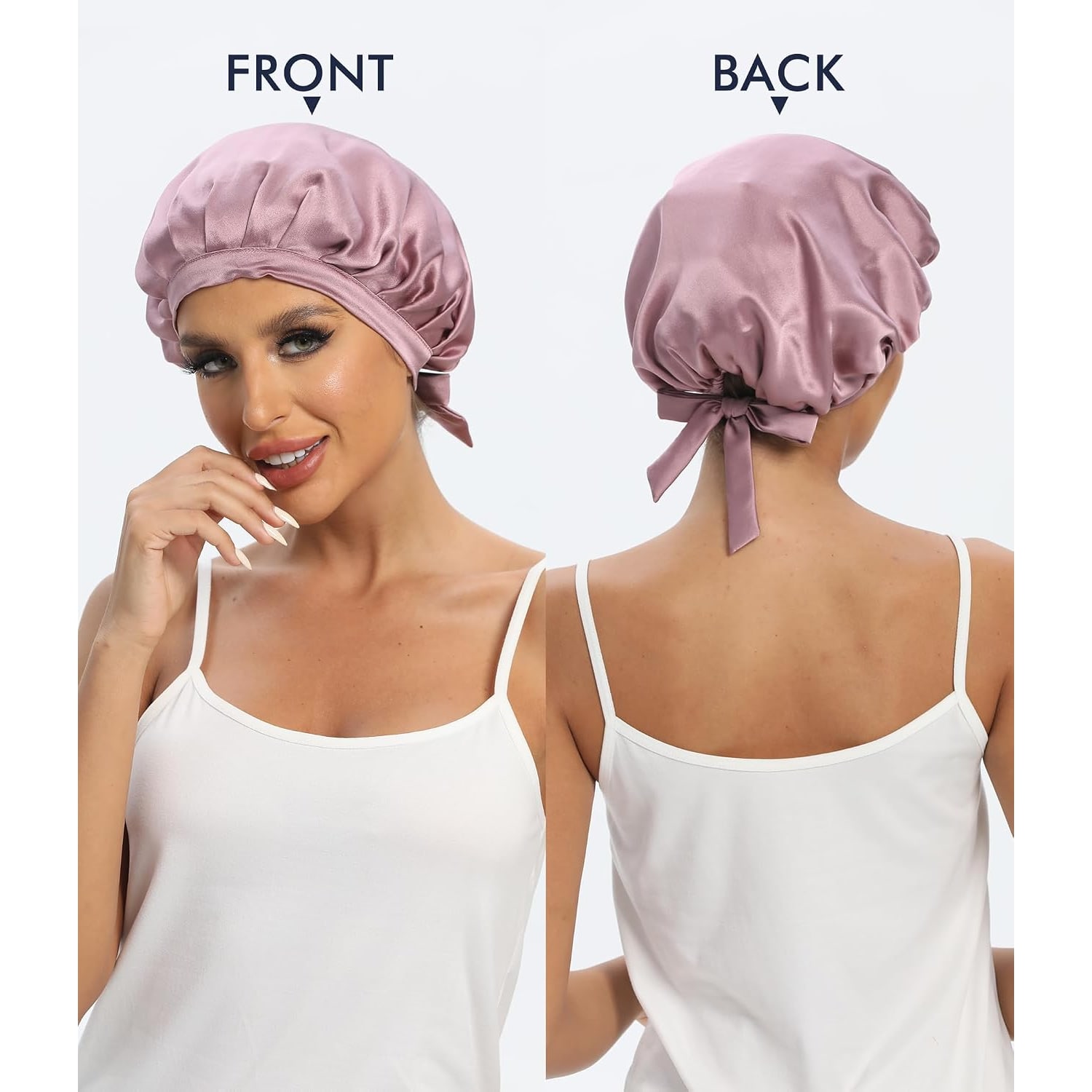
A tie band hands the decision to you. You pull it to whatever tension feels right and knot it. On a wash day, when your hair takes up more room, you tie it looser. On a night when you want it to hold firm, you pull it in. Elastic does not do that, and elastic does not stay the same strength over time.
It takes a few seconds longer than pulling on an elasticated bonnet. That is the only trade-off, and most people stop noticing after the first week.
Who this is for
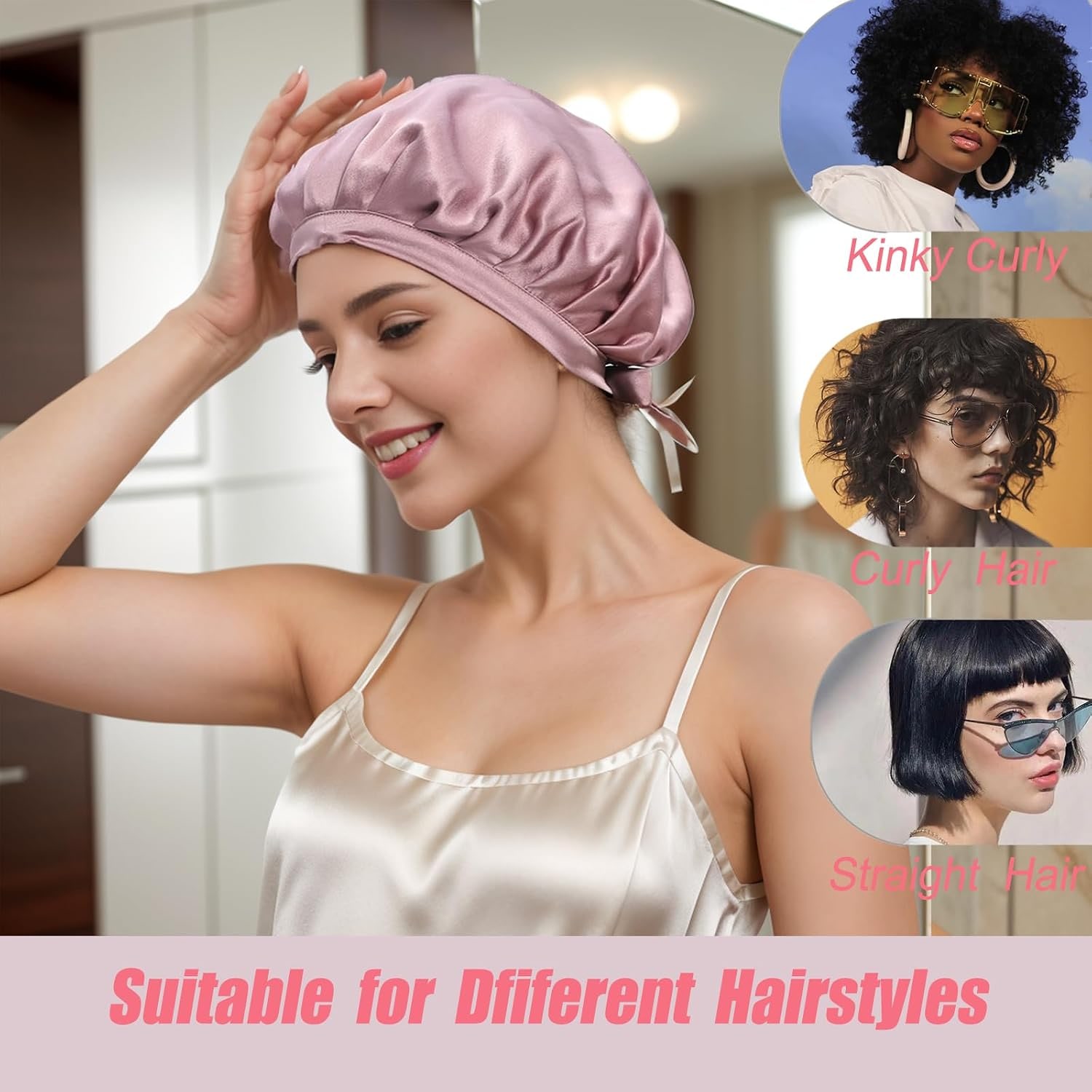
If you have curly or coily hair, a bonnet is probably already part of your routine or something you have been meaning to try. The combination of a roomy crown and an adjustable opening is what the best silk hair bonnet choices tend to have in common, because curls need space rather than compression.
If you have long straight hair, the appeal is different. You are mostly trying to keep hair contained so it is not spread across the pillow and under your shoulder all night. The doubled silk gives enough room to gather hair loosely and tuck it in.
If you have short hair, a fringe, or a fresh cut, a bonnet still has a job. Keeping hair off the pillowcase keeps it from being pushed in odd directions while you sleep.
If you use oils, leave-in creams or overnight treatments, a bonnet also keeps the product on your hair rather than on your bedding. Just plan to wash the bonnet a bit more often.
How to choose between bonnets
A few questions sort most of it out.
Is it really silk, and all the way through? Plenty of listings say "silk" in the title and polyester in the fine print. Check the fibre content, and check whether the lining is the same material as the shell.
What is the momme? If a seller will not say, that usually means it is low. Nineteen is a solid answer for a bonnet.
How does it close? Tie band or elastic, and if elastic, how wide and how firm. A narrow, tight elastic is the one to avoid.
Does the crown have room? Hold your hand inside if you can. A flat, shallow bonnet will crush whatever you put in it.
How do you wash it? Hand wash is the honest answer for silk. Any listing promising machine washing at high heat is overselling.
Looking after it
Hand wash in cool water with a mild detergent. Swirl it gently rather than scrubbing, and do not wring or twist it, because twisting stresses the weave. Press the water out between your palms or against a towel, then hang it to dry in a cool, airy place out of direct sun.
Skip bleach, skip the tumble dryer, and skip strong alkaline detergents. If you need to press it, use the lowest iron setting and work on the inside of the fabric. Mostly you will not need to.
How often depends on your routine. Once every week or two suits most people. If you use oils nightly, wash it more often, because residue builds up and the silk stops feeling smooth.
Stored in its gift box between uses, it stays clean and keeps its shape. That is a small thing, but it saves the bonnet from being crumpled in a drawer with everything else.
On gifting
Hair products are hard to buy for other people because preferences are so specific. A bonnet is one of the exceptions. The tie band removes the sizing question, the dusty pink is a quiet colour rather than a loud one, and it arrives in a gift box already. It works for a birthday, a thank you, or as part of a larger present for someone who treats their hair properly.
The short version
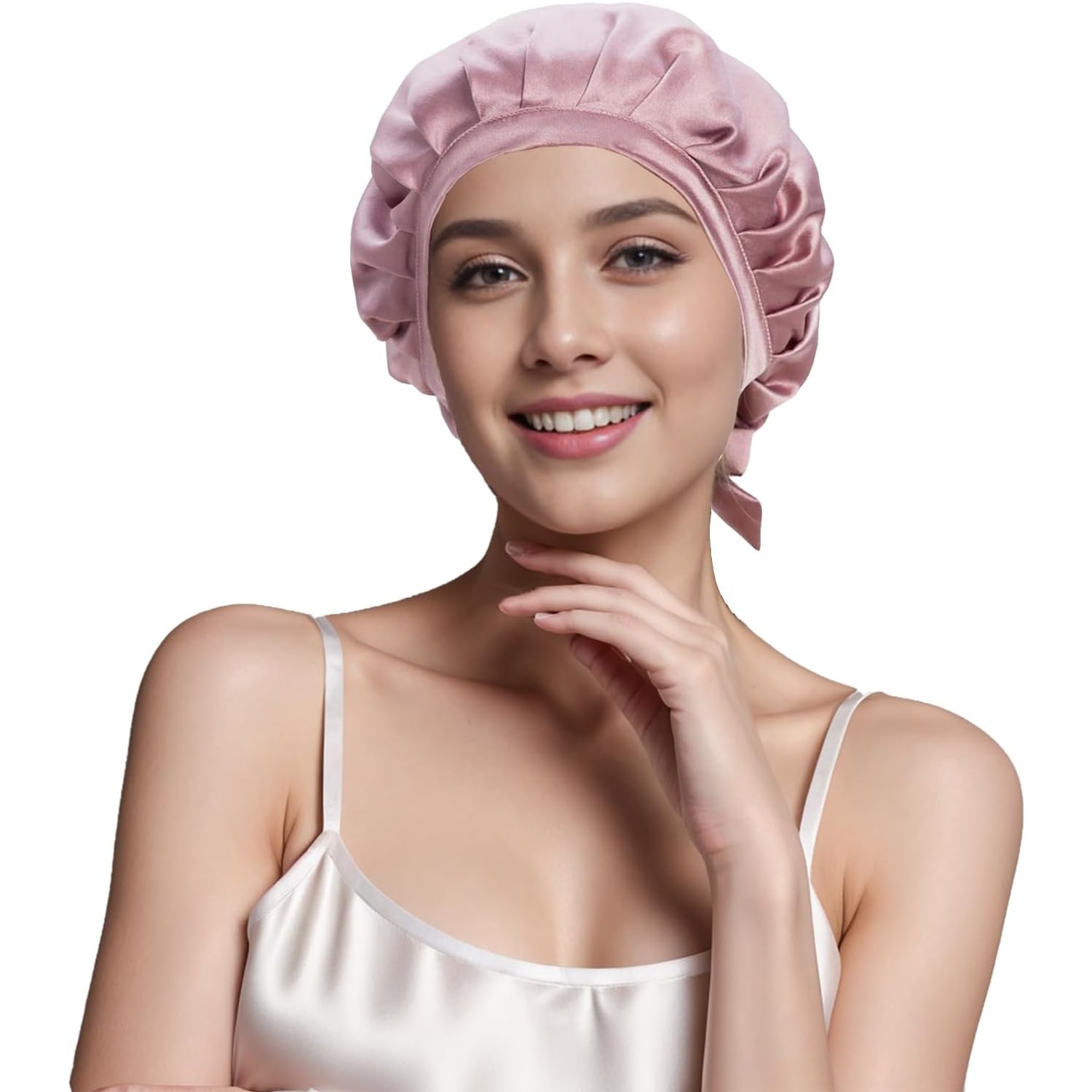
This is a dusty pink sleep bonnet in 100% pure mulberry silk, 19 momme, built as a double layer so silk faces both inward and outward. It closes with a tie band you set yourself, so there is no fixed elastic to grip your forehead or give out after six months.
Silk is smooth, so hair slides across it rather than catching, which is the whole reason bonnets exist. The doubled construction gives the crown enough room that long hair and curls are not flattened.
Hand wash it cool, hang it to dry out of the sun, and it will serve you for a long time. It comes in a gift box, so if you are buying it for someone else, there is nothing left to do.