

The complete guide
How to Choose a Silk Sleep Mask That Actually Stays Put
The problem is rarely the bed
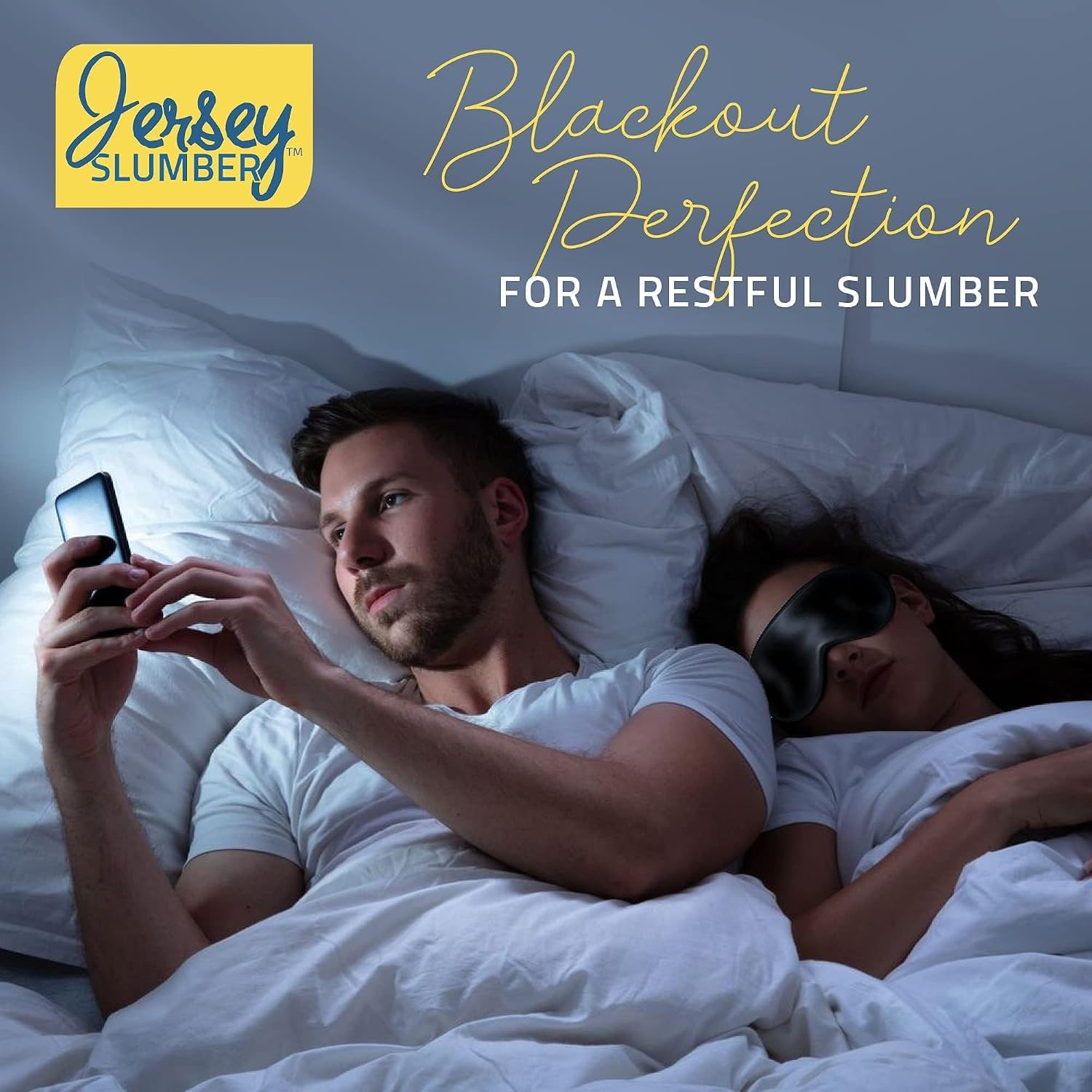
People tend to blame the mattress when sleep goes badly. Often the real culprit is light. A sliver under the door, a charging cable with a bright blue LED, a street lamp through thin curtains, or sunrise arriving at five in the morning. Your eyes pick all of that up even when the lids are closed, and the body reads it as a reason to start waking up.
Fixing a room properly is expensive and slow. Blackout curtains need measuring and mounting. Taping over electronics is fiddly and you miss one. Moving the bed only helps until the sun shifts. A sleep mask skips all of that. It puts the dark where it needs to be, which is a few millimetres in front of your eyes, and it works the same in your bedroom, a hotel, a plane seat or a spare room at a relative's house.
That portability is the underrated part. You can take the right conditions with you. That is why a mask ends up living in a travel bag permanently for a lot of people, long after they have sorted out the curtains at home.
Why silk is the usual recommendation
Fabric choice is not just about luxury wording. It changes how the mask behaves against your face over seven or eight hours.
Silk is a very smooth fibre. Skin slides over it rather than catching, which means less of the gentle tugging you get from a rougher fabric when you turn your head on the pillow. If you have ever woken up with a crease pressed into one cheek, you have felt what friction does across a night.
It also feels cool when you first put it on. That is a small thing, but it is a pleasant small thing when you are trying to settle. Heavier synthetic masks, especially ones with foam inserts, can feel warm and close very quickly.
The trade-off is care. Silk wants hand washing in cool water and drying flat. That is two minutes of work every week or two, not a chore, but it is more attention than throwing a cotton mask in with the towels.
Side sleeping changes the maths
Here is the thing most mask listings skate over. A mask that is comfortable lying on your back can be a nuisance on your side.
When you roll over, the pillow pushes against whatever is on that side of your face. A thick, moulded, foam-cupped mask has nowhere to go, so it either lifts away on the far side and lets light in, or it twists and ends up over one eyebrow. You then wake up at three in the morning sorting it out, which rather defeats the point.
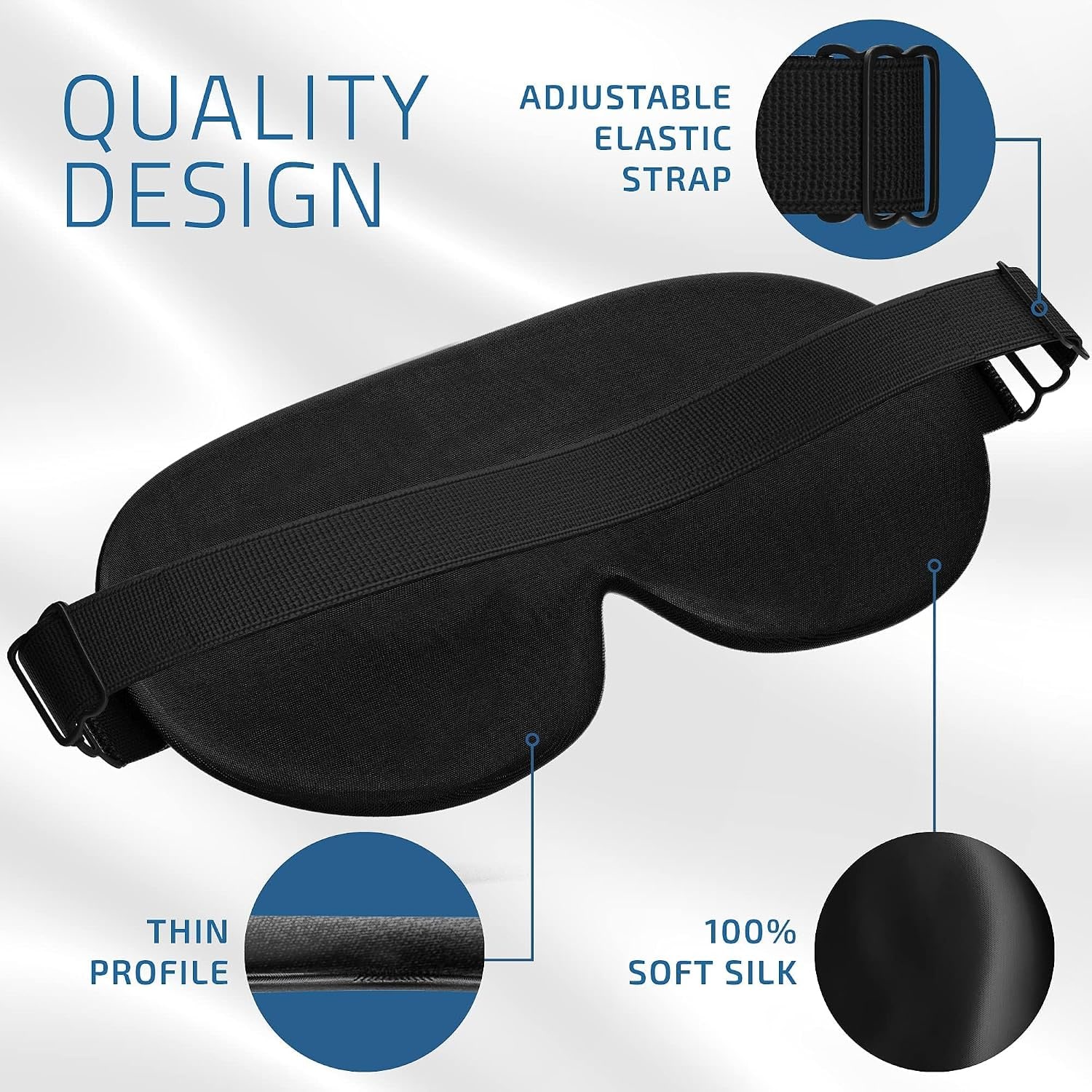
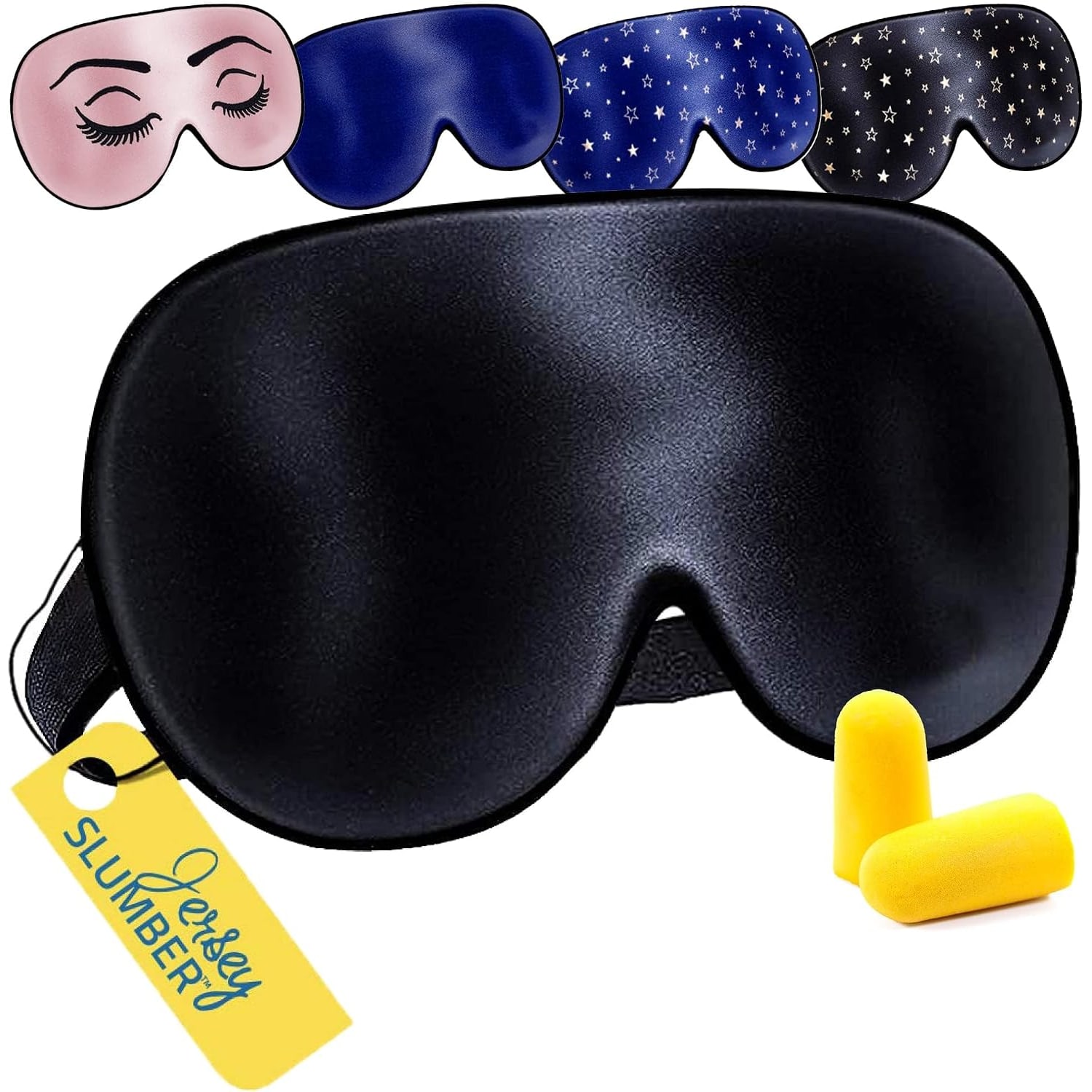
A slim mask behaves better. This one is 0.2 in (0.5 cm) thick, so it flattens against the face instead of fighting the pillow. There is less material to catch on the pillowcase and less to twist it out of position.
Strap placement matters too. The strap should sit around the widest part of the back of the head, not high on the crown and not down on the neck. Set there, the pull is even and the mask does not creep upward during the night. Anyone shopping for the best sleep mask for side sleepers should be looking at thickness and strap behaviour before anything else.
Getting the fit right
Fit is where most people go wrong, and it is easy to correct.
Start looser than you think you need. Put the mask on, lie down, then tighten in small steps until it stops sliding when you turn your head. Stop there. If you can feel the strap pressing behind your ears or leaving a mark on your forehead in the morning, it is too tight.
Seat the lower edge against the top of your cheekbones rather than letting it rest on the bridge of the nose alone. That closes most of the gap where light creeps in. A small adjustment at the nose does more for darkness than cranking the whole strap tighter.
If you wear your hair up, decide where the strap sits relative to the bun before you settle. A strap riding over a topknot will slip. Under is usually better.
Who gets the most out of one
Shift workers are the obvious group. Sleeping at eleven in the morning is a losing battle without something over the eyes, and no amount of curtain helps if you nap on a sofa in a bright living room.
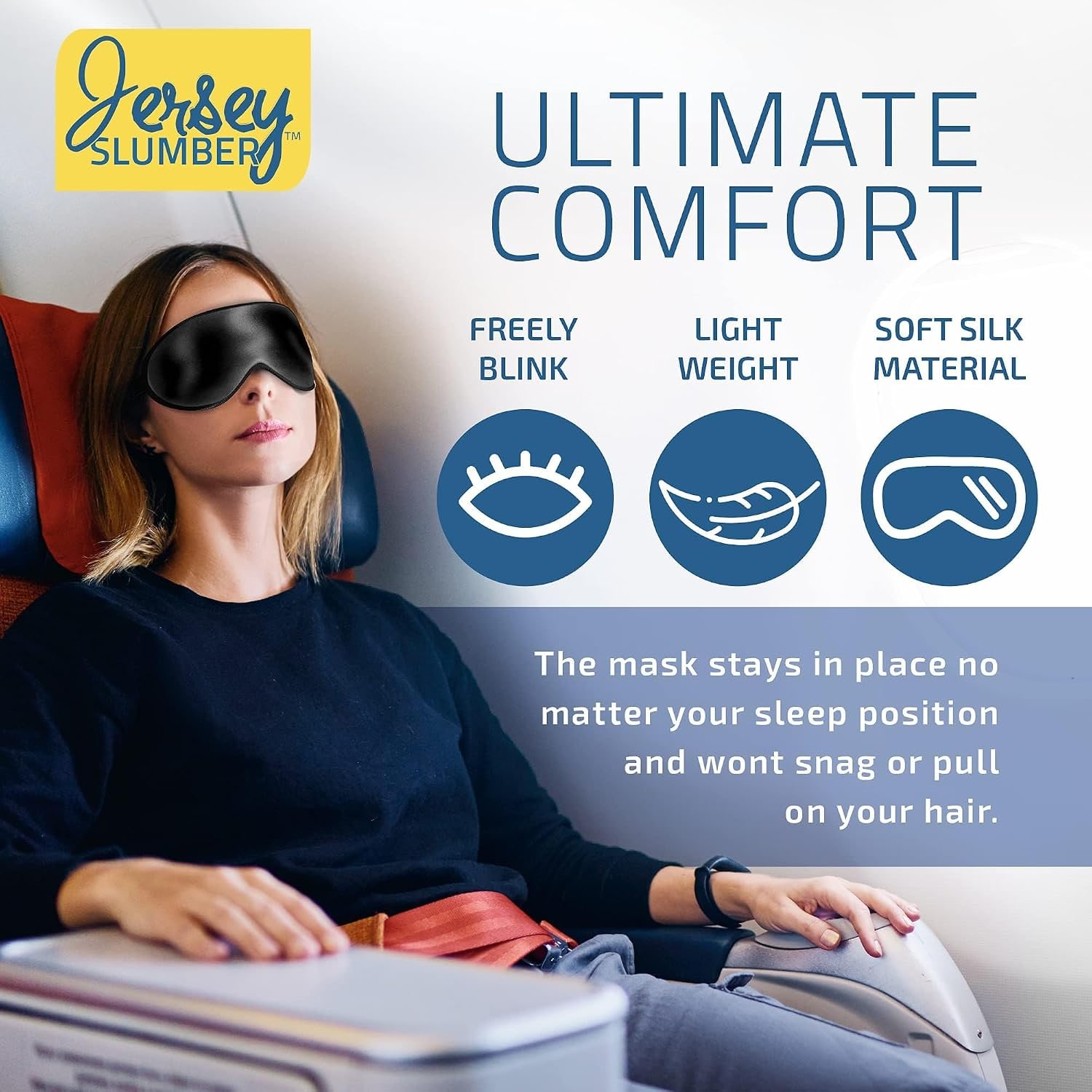
Frequent flyers are next. Cabin lighting is unpredictable, someone always opens a window shade, and reading lights come on without warning. A mask that folds flat into a jacket pocket is one of the better travel sleep mask purchases you can make for the money.
New parents use them for short, broken sleep during daylight. Students in shared rooms use them because they cannot control when a flatmate turns a light on. People who wake at first light use them for the extra hour. Anyone with a partner who reads in bed will understand immediately.
A plain black mask also suits people who do not want anything fussy. No pattern, no branding on the face, nothing to think about.
Looking after it
Hand wash in cool water with a mild detergent. Swirl it gently, do not scrub. Rinse, then press the water out between the folds of a towel rather than wringing, since wringing stresses both the silk and the stitching.
Dry it flat, away from direct heat. A hot windowsill will make the fabric brittle over time and can slacken the elastic.
Keep it away from anything with hooks, rough zips or hook-and-loop fastening. Those pull threads on silk faster than anything else. If you store it in a travel pouch, make sure the pouch is not shared with a watch strap or a charger with sharp edges.
Every week or two is a sensible washing rhythm. If you use night creams or facial oils, go more often, because those transfer onto the fabric and build up.
Small details worth knowing
Give yourself a few nights to adjust. Wearing something on your face is unfamiliar at first, and plenty of people take the mask off on night one without really trying. By night three or four, most stop noticing it.
Keep a second one if you travel often. Masks are the sort of thing that gets left in hotel beds, and it is annoying to be without one on the return leg.
If noise is also a problem, pair the mask with earplugs. Light and sound are separate issues, and solving only one usually leaves you awake anyway.
Finally, do not expect a mask to fix a sleep problem that has another cause. It handles light. It is very good at handling light. If you are lying awake with a busy head, that is a different thing to work on.
The short version
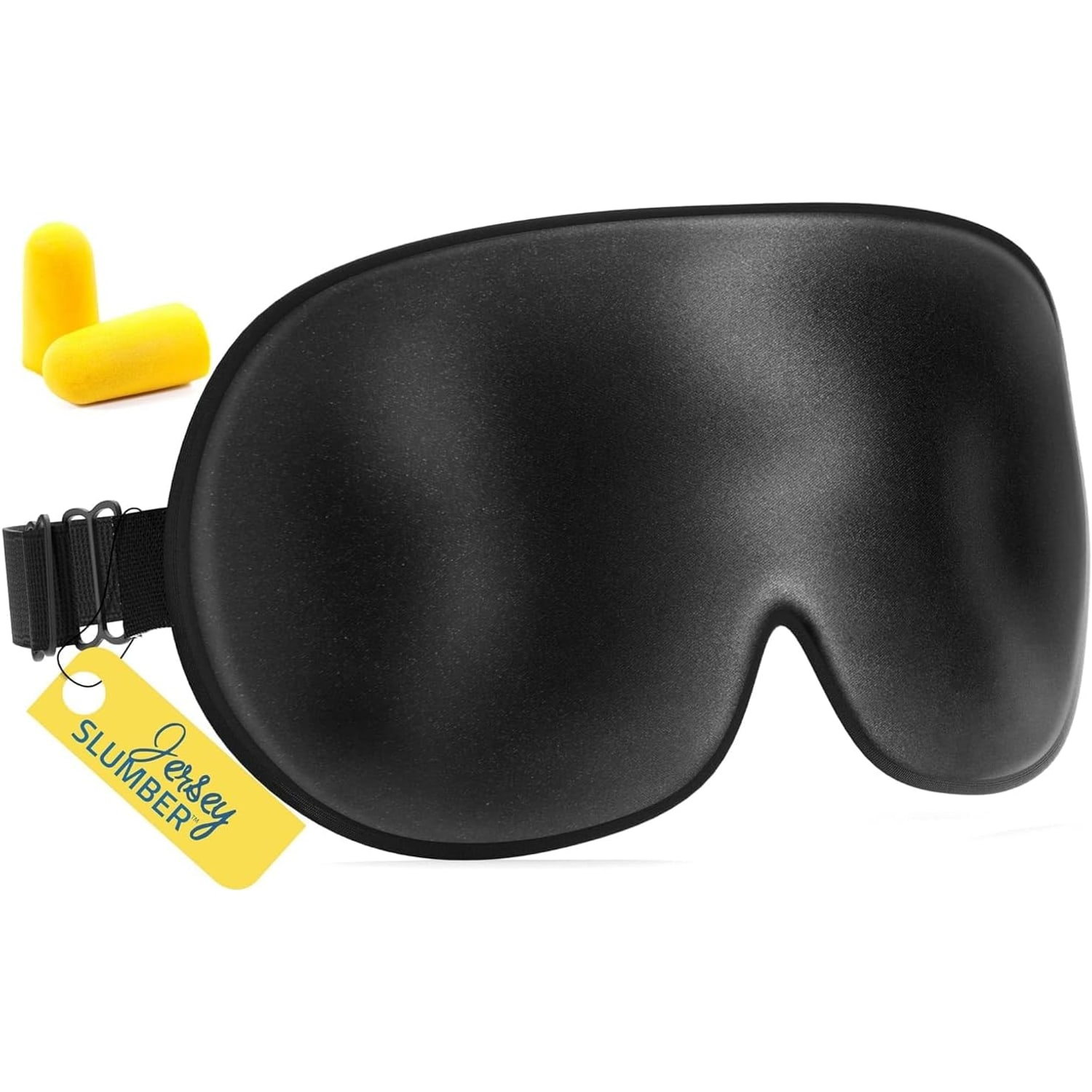
A black silk sleep mask is a cheap, small solution to a very common problem. This one measures 8 x 4 x 0.2 in (about 20.3 x 10.2 x 0.5 cm), has an adjustable elastic strap and is slim enough to stay put when you sleep on your side. Silk gives you a smooth surface against the skin with less drag than cotton.
Set the strap just firm enough to hold, seat the bottom edge on your cheekbones, hand wash it in cool water and dry it flat. Do that and you have something that works at home, on a plane and in any room where the curtains are not up to the job.