
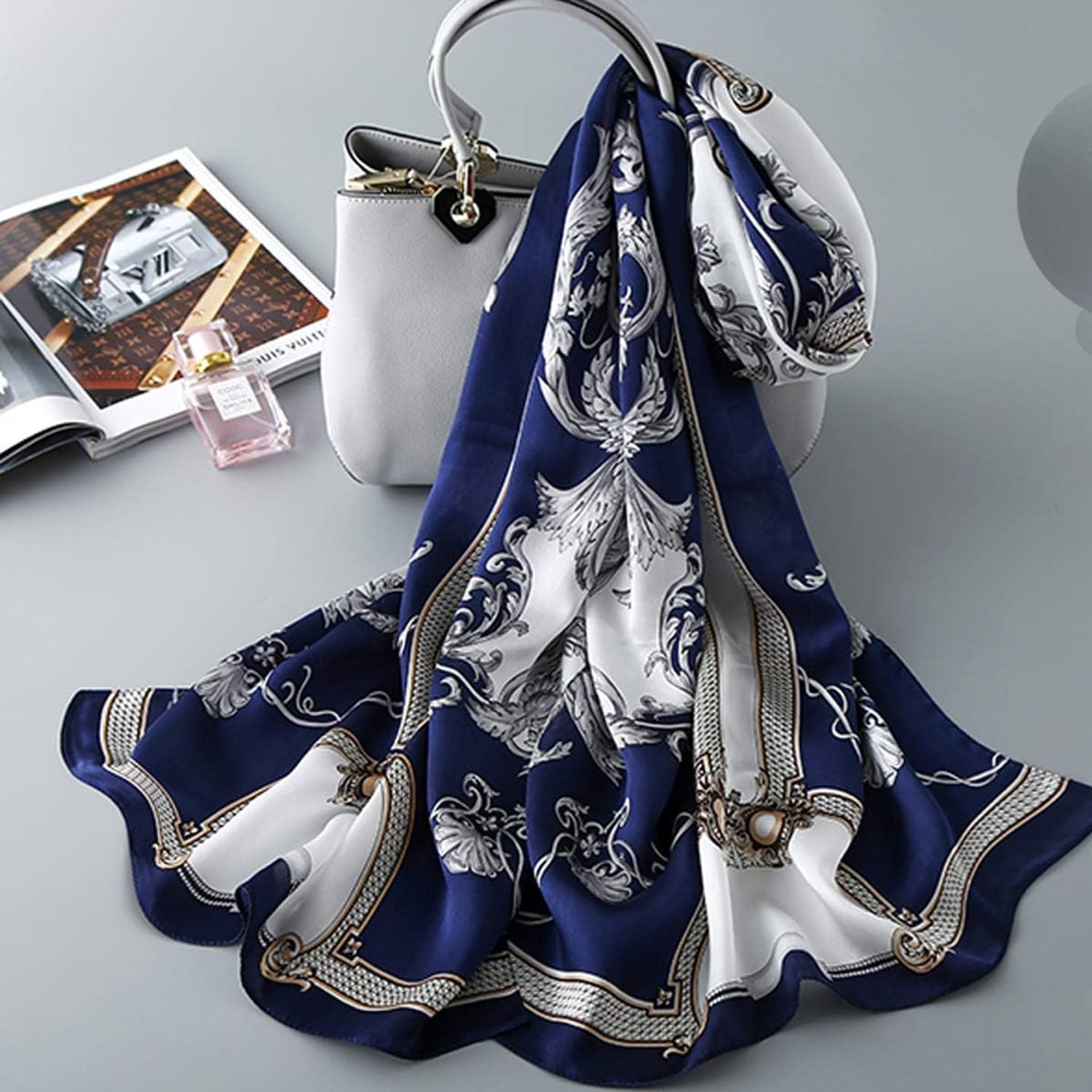
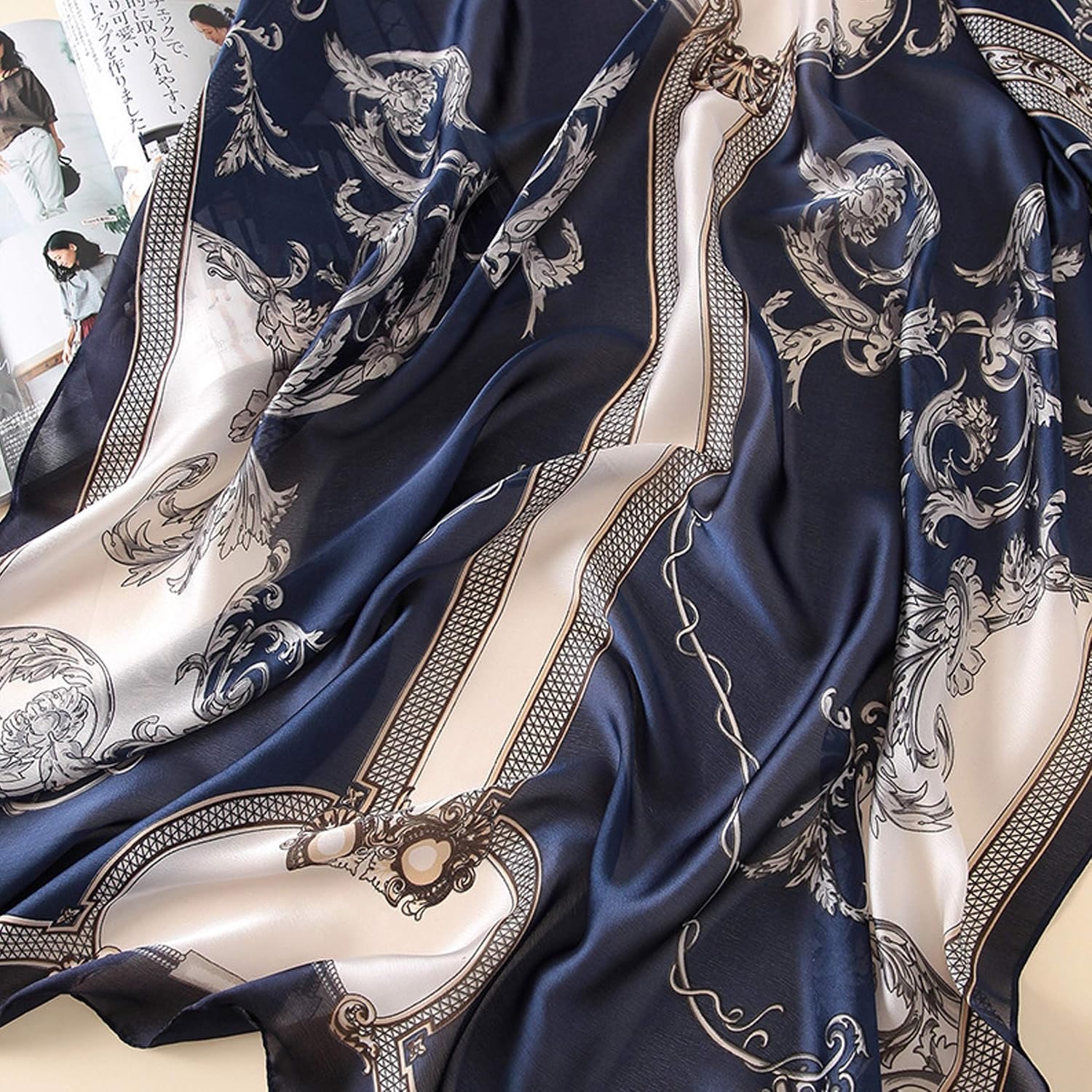
The complete guide
How to Choose a Long Lightweight Silk Scarf (and Actually Wear It)
The problem with most scarves
Most scarves fall into one of two camps. Either they are small squares that look lovely in photographs but do almost nothing once you are actually cold at the neck, or they are heavy winter knits that are far too much for an air-conditioned room. Neither is much help in the situation most people find themselves in, which is sitting somewhere indoors where the cooling has been set for a different body than theirs.
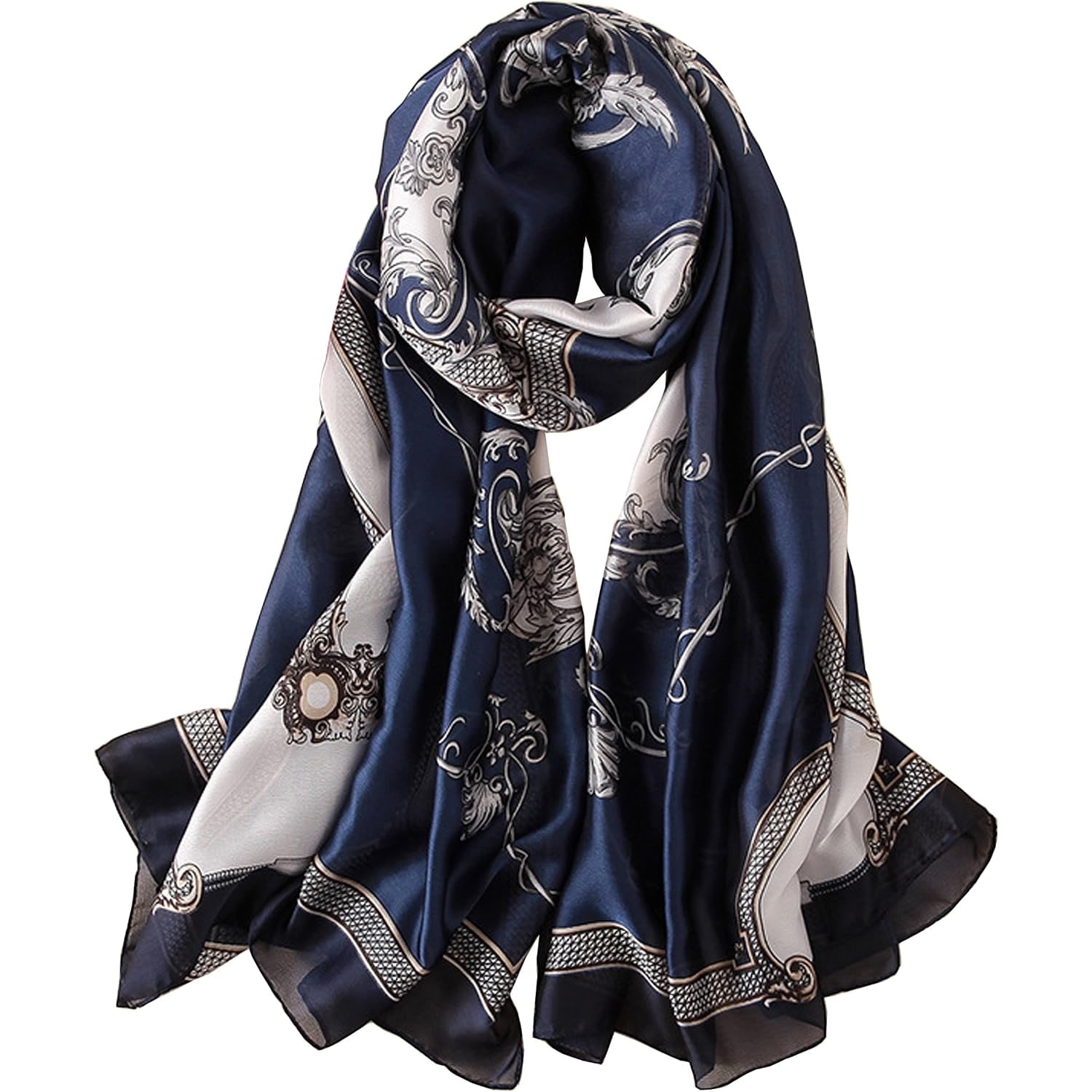
That gap is where a long lightweight silk scarf sits. It is big enough to cover something, thin enough to carry everywhere, and smart enough to not look like you raided a ski cupboard. At 70 x 35 inches (180 x 90 cm), this one is on the larger end of the scale, which is the point. The extra width turns it from a neck accessory into a silk shawl wrap you can genuinely sit under.
What mulberry silk actually does
Silk gets talked about in flowery terms, so it is worth stripping it back to what the fibre does. Mulberry silk comes from silkworms raised on mulberry leaves, which produces a long, even filament. Woven, that filament gives you a fabric with three useful properties.
First, it is smooth. The surface has very little texture, so it slides over skin and hair with less friction than cotton or wool. That is why people like silk near the face and neck, and why it does not leave the scratchy feeling a rough knit can.
Second, it drapes. Silk falls in soft vertical folds rather than standing away from the body in stiff planes. On a 35 inch width that matters enormously, because a stiff fabric that wide would look like a tablecloth. Silk reads as elegant at the same dimensions.
Third, it is light for the coverage it gives. One layer across the shoulders is barely noticeable in weight but makes a real difference to how a cool room feels. That is the honest claim for a scarf like this. It takes the edge off. It is not a coat.
Why the long rectangle shape wins
If you only ever buy one silk scarf, make it a long rectangle. Square scarves are beautiful but limited. They are best at the neck and not much good anywhere else, because folding a square into a wearable shoulder cover always leaves awkward points hanging.
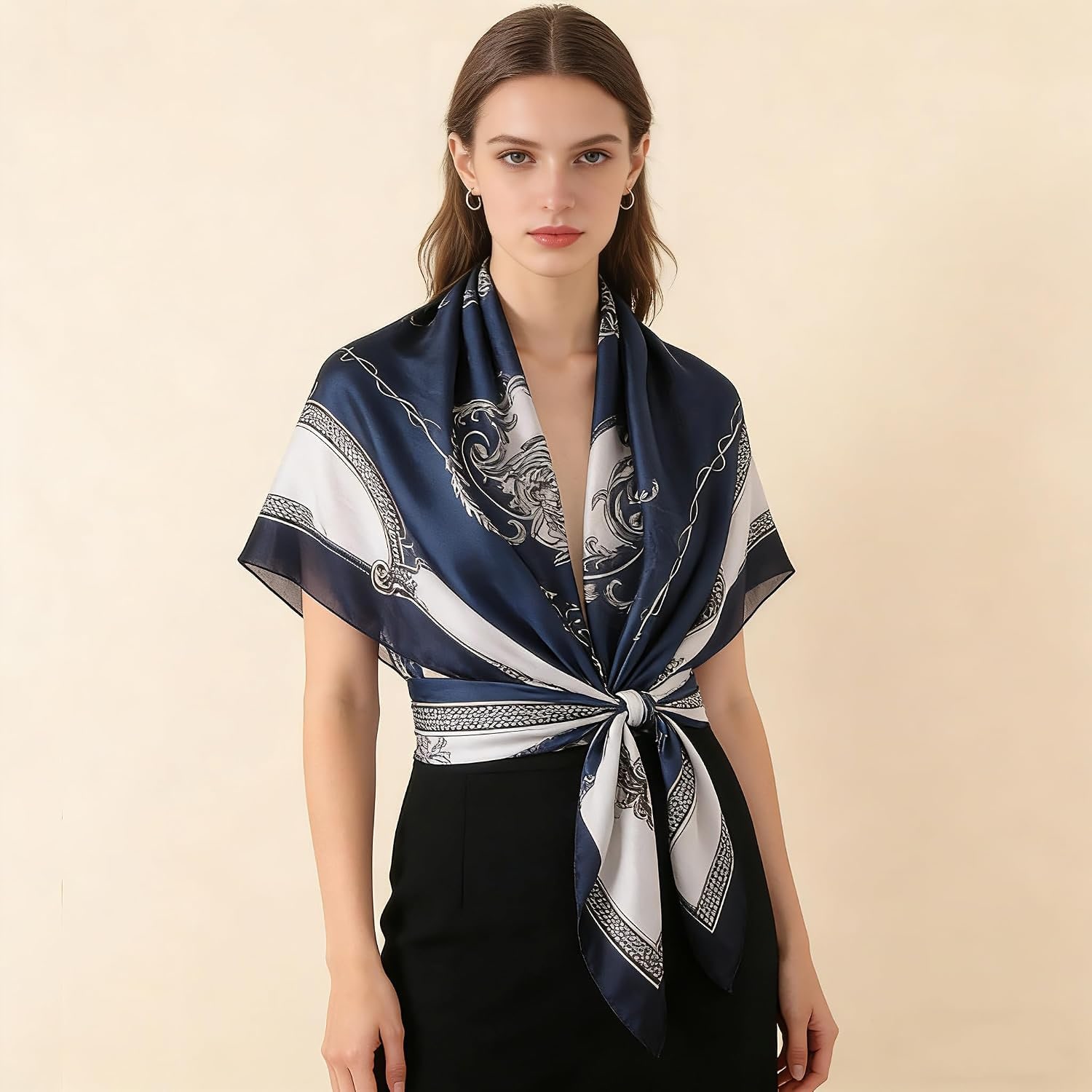
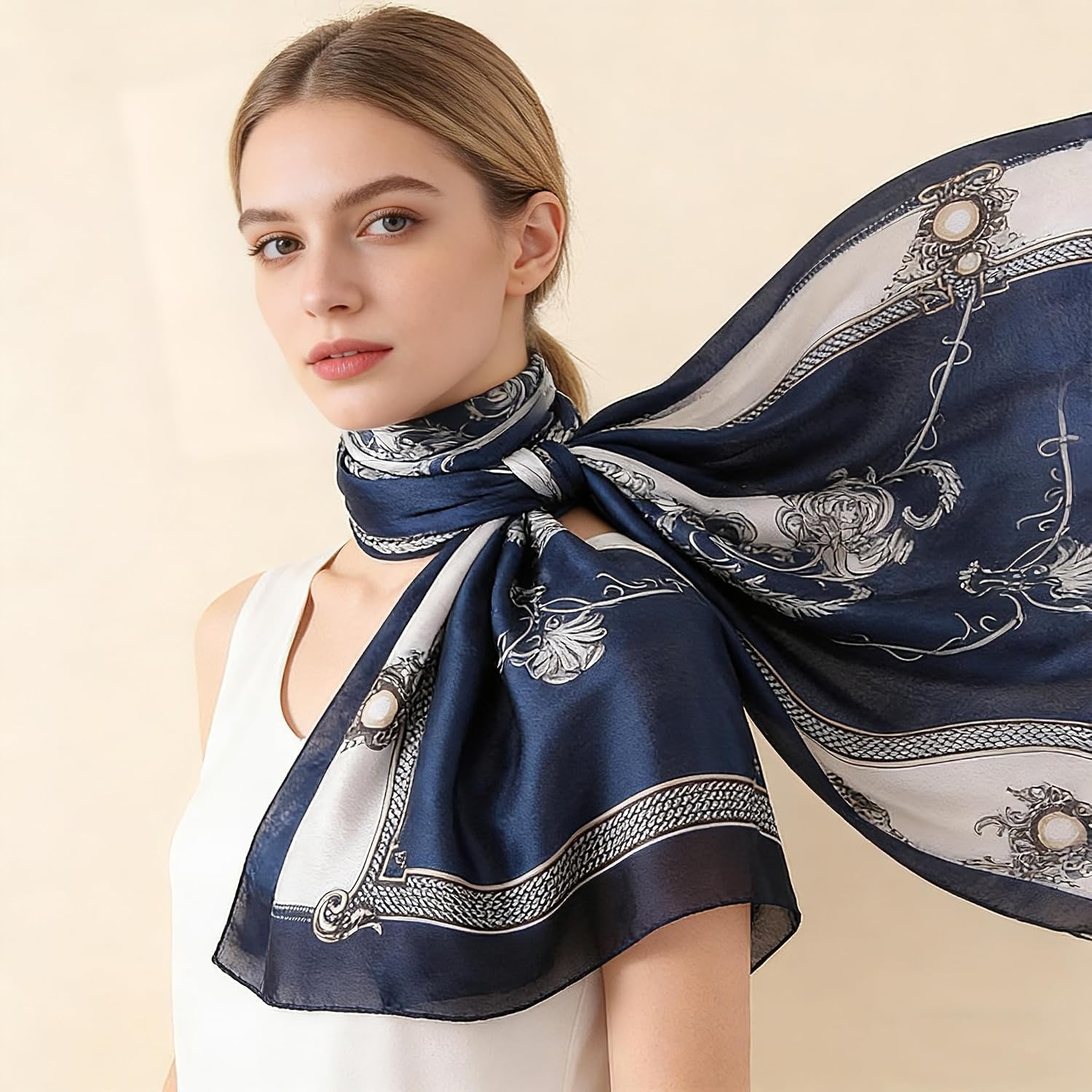
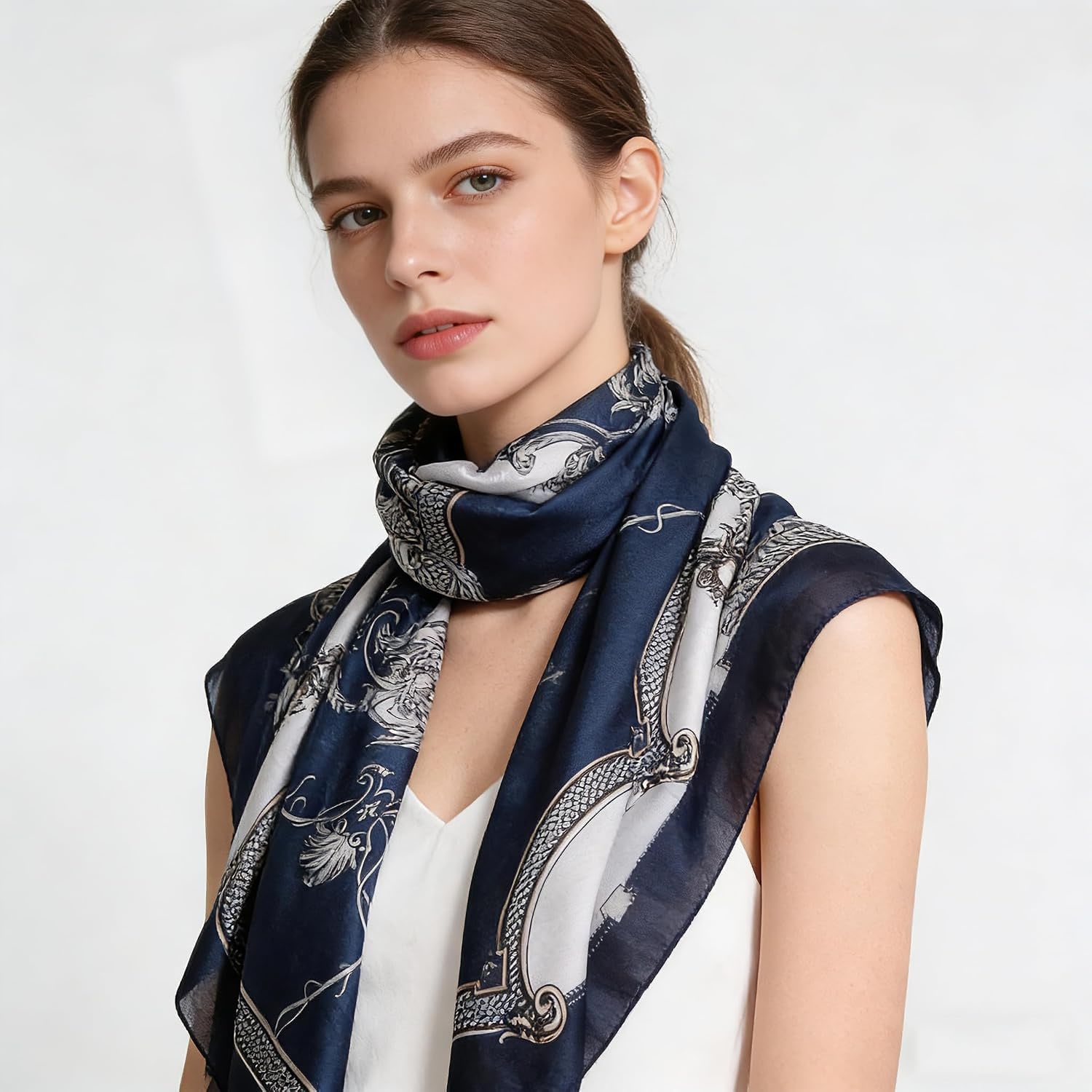
A long rectangle folds into more shapes. Loop it twice around the neck and you have a scarf. Open it flat over the shoulders and you have a wrap. Fold it lengthwise into a four inch band and you have a hair tie or a headband. Tie it round the hips and you have a beach cover. Fold it in half and lay it over your lap on a long flight and you have a small blanket.
The 70 inch length is specifically what makes the looped neck styles work. Shorter scarves run out of fabric after one wrap, leaving two stubby ends. With this length you can wrap, knot and still have the ends falling cleanly down the front of a shirt or jacket.
Who this suits
If you work in an office where the air conditioning is aggressive, this is probably the single most useful thing you can keep in a drawer. The same goes for anyone who flies often. The best packable silk scarf for travel is the one that is already in your bag when you need it, and this folds small enough that keeping it there is no sacrifice.
It also suits people who attend a lot of events where the dress code leans formal. A sleeveless dress plus a wide silk wrap handles the walk in and the cold ballroom without needing a jacket that ruins the line of the outfit. If you are shopping for the best silk wrap for weddings, width is the specification to check, and 35 inches is comfortably in range.
Finally, it suits anyone buying a present without knowing sizes. A silk scarf gift sidesteps the whole problem of fit. There is nothing to measure and nothing to return because it is too tight.
Choosing colour and how to think about it
Since colour is not specified and varies by storefront listing, think about it in terms of use rather than fashion. If you want one scarf that goes with everything you already own, go neutral. Cream, stone, navy, charcoal and soft grey will sit happily over almost any work wardrobe and will not fight with a printed dress.
If you want the scarf to be the interesting part of an outfit, that is when a print or a strong colour earns its keep. Pair it with plain clothes and let it do the talking. The risk with a bold large silk scarf is that a 180 cm length of loud pattern is a lot of visual weight, so balance it with something quiet.
One practical note. Very pale silk shows marks from makeup and sunscreen at the neckline more readily than mid tones. If you wear a lot of foundation, a mid or deep shade is the easier daily choice.
Living with silk, honestly
Silk needs a bit more care than polyester, and it is fair to say so. The care instruction here is hand wash only, and that is worth following rather than chancing a delicate machine cycle.
The routine is simple once you have done it twice. Fill a basin with cool water, add a capful of detergent made for delicates, and move the scarf around gently for a minute or two. Do not scrub, do not twist, do not wring. Rinse in cool water until the water runs clear. Then lay the scarf flat on a towel, roll the towel up like a swiss roll to squeeze the water out, and unroll it to dry flat or hang it in the shade.
Keep it away from direct sun while drying, because sunlight fades dyed silk over time. Press it on a low setting with a thin cloth between the iron and the fabric. If you remember nothing else, remember cool water and no wringing.
A few other habits help. Put perfume and hairspray on before the scarf goes on, and let them dry. Check bracelet clasps, watch edges and bag hardware for rough spots, because fine silk catches on anything with a burr. Store it loosely rolled rather than crammed into a corner, and it will come out with fewer creases.
What this scarf does not claim
It is worth being clear about what is not stated. The momme weight is not given. We would rather say that plainly than guess.
What is confirmed is the size at 70 x 35 inches (180 x 90 cm), the fabric as mulberry silk, the listed thickness of about 0.1 in, and the care instruction of hand wash only. Everything else in this guide is about how scarves of this type behave, not about specifications we cannot verify.
The short version
A long lightweight silk scarf at 180 x 90 cm is the most useful scarf shape you can own. Mulberry silk gives it a smooth surface and a soft fall, so it drapes instead of bunching. It covers your shoulders when a room is cold, folds into a handbag when it is not, and switches between casual and formal depending only on how you fold it.
Look after it with cool water and flat drying and it stays in rotation for years. If you are choosing between this and a smaller square, and you want the scarf to work as a wrap as well as at the neck, this is the one to take.