
The complete guide
How to Choose a Silk Sleep Bonnet That Actually Stays On
The problem with waking up to undone hair
You go to bed with your hair looking fine. You wake up and it has been through something. Flyaways at the crown, a flattened side where you slept, curls that have lost their shape, a blowout that lasted exactly one night. Nothing dramatic happened. You just moved around on a cotton pillowcase for seven hours.
Cotton is a grippy fabric. The fibres have a rough, irregular surface, and every time your head turns, hair drags across it. Multiply that by hundreds of small movements a night and you get friction damage that shows up as frizz and breakage over time. It also pulls moisture and product out of your hair, which is why styles fade faster than you expect.
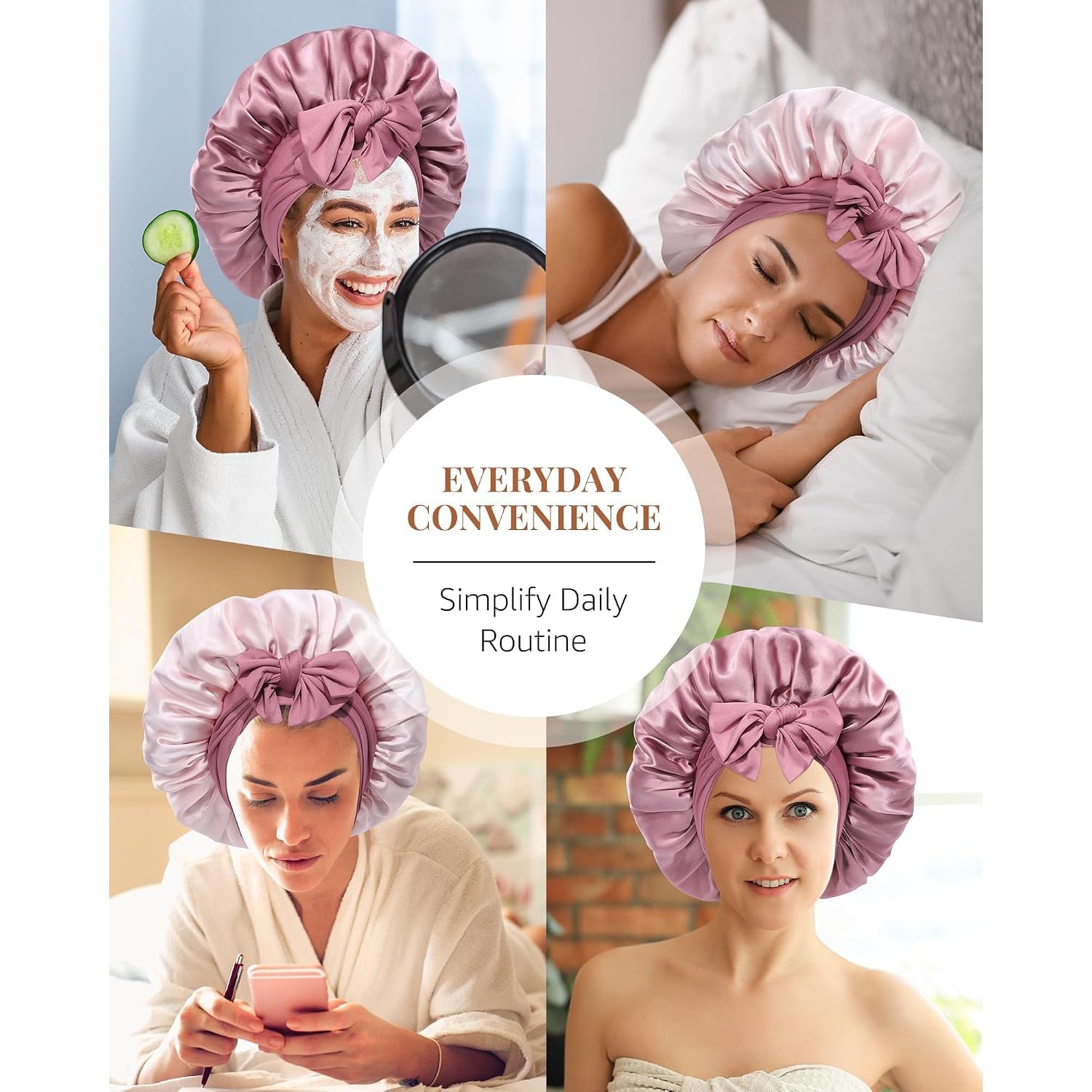
A silk sleep bonnet fixes the mechanical half of this. Silk fibres are smoother, so hair slides rather than catches. And unlike a pillowcase, the bonnet moves with you. It does not matter whether you sleep on your back, your side or face down in a pile of cushions.
What 19 momme actually tells you
Momme is the weight measure for silk, written as a number followed by "momme" or sometimes "mm". It describes how much a fixed area of the fabric weighs, which in practice tells you how dense and durable it is.
Low momme silk, around 12 or 13, is thin. It feels slippery but flimsy, and it wears out quickly at seams and stress points. Very high momme, 25 and up, is heavy and luxurious but stiffer and more expensive than most people need for a hair accessory.
Nineteen momme sits in the useful middle. It has enough body that the fabric holds its shape when you tie it, enough drape that it folds softly over the head, and enough density that it survives regular hand washing. If you have ever bought a cheap silk cap that went limp and translucent after a month, it was almost certainly a lower momme fabric.
Mulberry silk refers to the source. Silkworms fed exclusively on mulberry leaves produce long, uniform fibres, which makes a smoother and more even cloth than wild or mixed silk. It is the standard for good silk bedding and accessories.
Why the tie band matters more than you think
Most sleep bonnets close with sewn-in elastic. It is cheap to make and quick to put on, and it is also the single most common reason people stop wearing a bonnet.
Elastic has one setting. If it is tight enough to stay on, it often presses a line across your forehead. If it is loose enough to be comfortable, it comes off in the night. And elastic degrades. After a few months of washing it has stretched out and the bonnet no longer stays put at all.
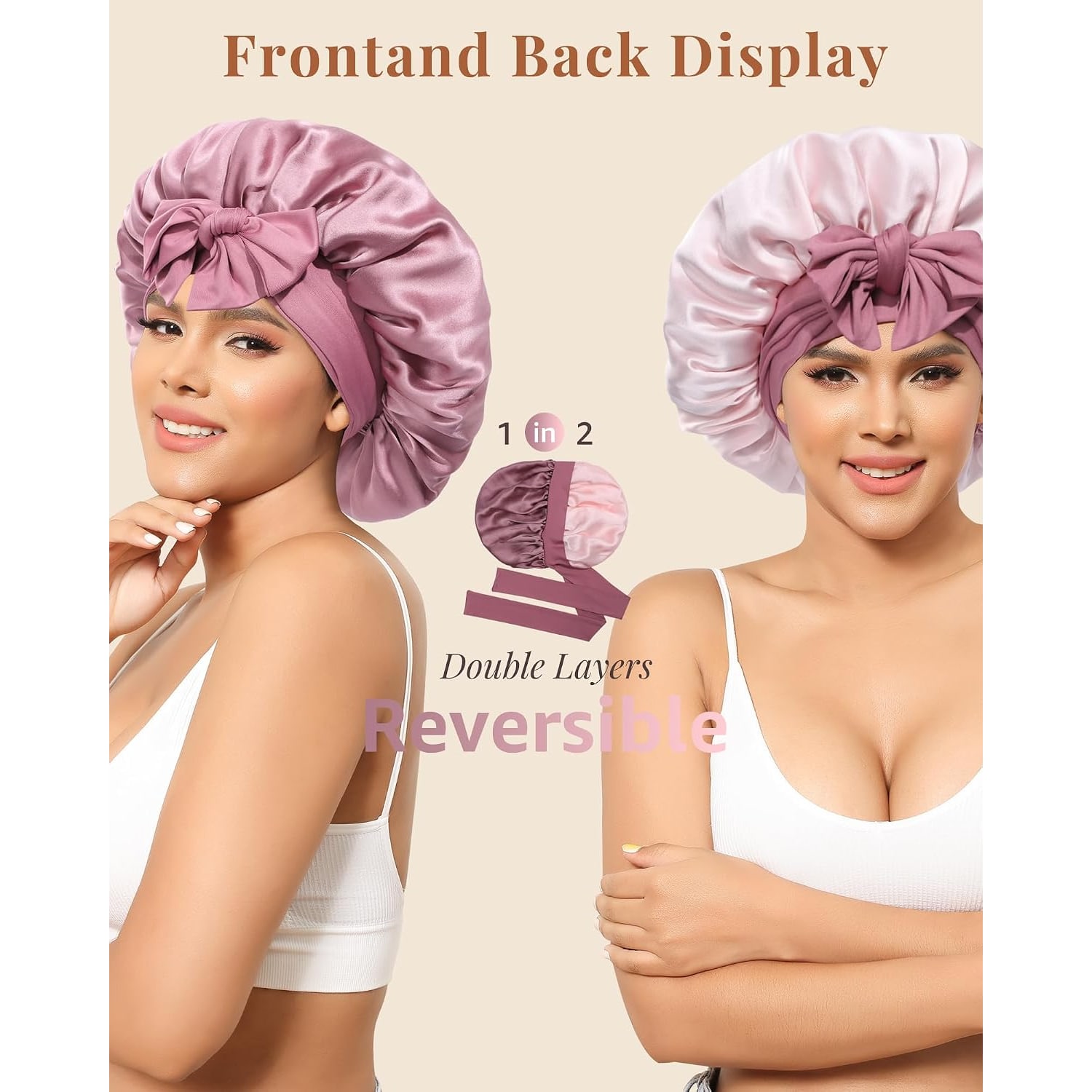
A silk tie band removes all three problems. You choose the tension each night, and you can change it depending on whether you have just washed your hair or whether it is day three of a style. You can also move the knot. If you are a side sleeper, that is the detail that matters most, because you can put the knot at the back or off to one side so you are not resting your head on it.
The band on this bonnet is silk as well, so even the part touching your hairline is smooth.
Size and why roominess wins
The cap on this bonnet measures 35cm (13.8 inches) around the exterior. That is a generous size, and generous is what you want.
A small cap compresses hair. It presses curls flat against the scalp, kills volume in a blowout and creates a hard crease where the band sits. A roomy cap gives hair somewhere to sit. Curls keep their shape because they are not being squashed. A pineapple on top of the head fits inside without being flattened.
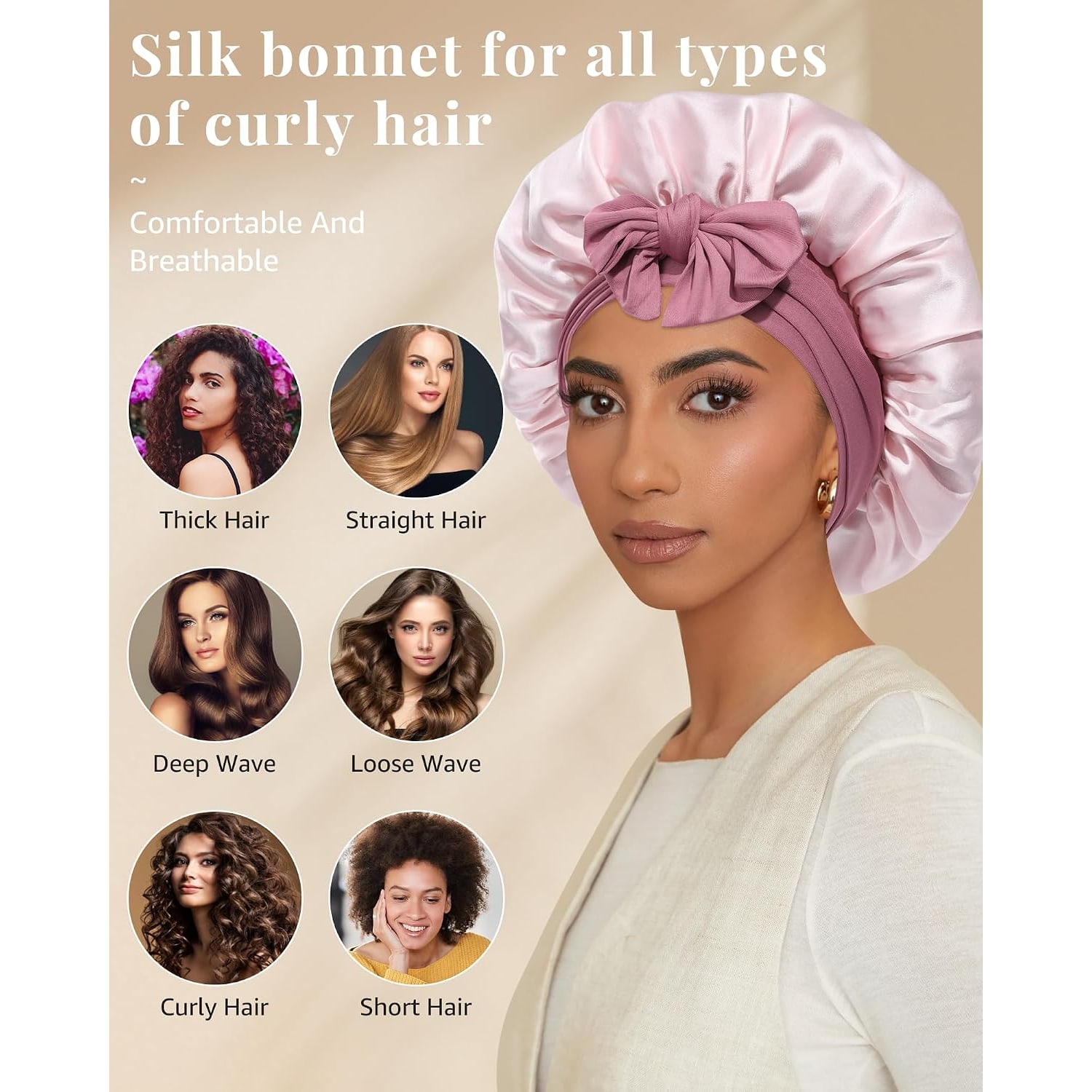
This size handles straight hair through to medium curl patterns comfortably, mid-length tighter coils, braids and twists of reasonable length, and set styles like blowouts or rollers. Very long or very dense hair still fits, but you will want to gather it loosely on the crown first rather than just stuffing it in. If you have waist-length thick hair, spend a few nights working out your preferred way of coiling it before you decide the fit is wrong.
Who it suits
If you have textured or curly hair, a bonnet is probably already part of your routine, and the question is just whether this one is roomy enough. It is, for most patterns up to mid-length coils.
If you have straight or wavy hair and have never tried one, the case is about frizz and style retention. Fine straight hair tangles badly overnight, and a smooth surface helps with that.
If you have just paid for a blowout, a treatment or a set, a bonnet is the cheapest way to make it last another day or two. If you use leave-in products, the bonnet also keeps them on your hair instead of on your pillowcase.
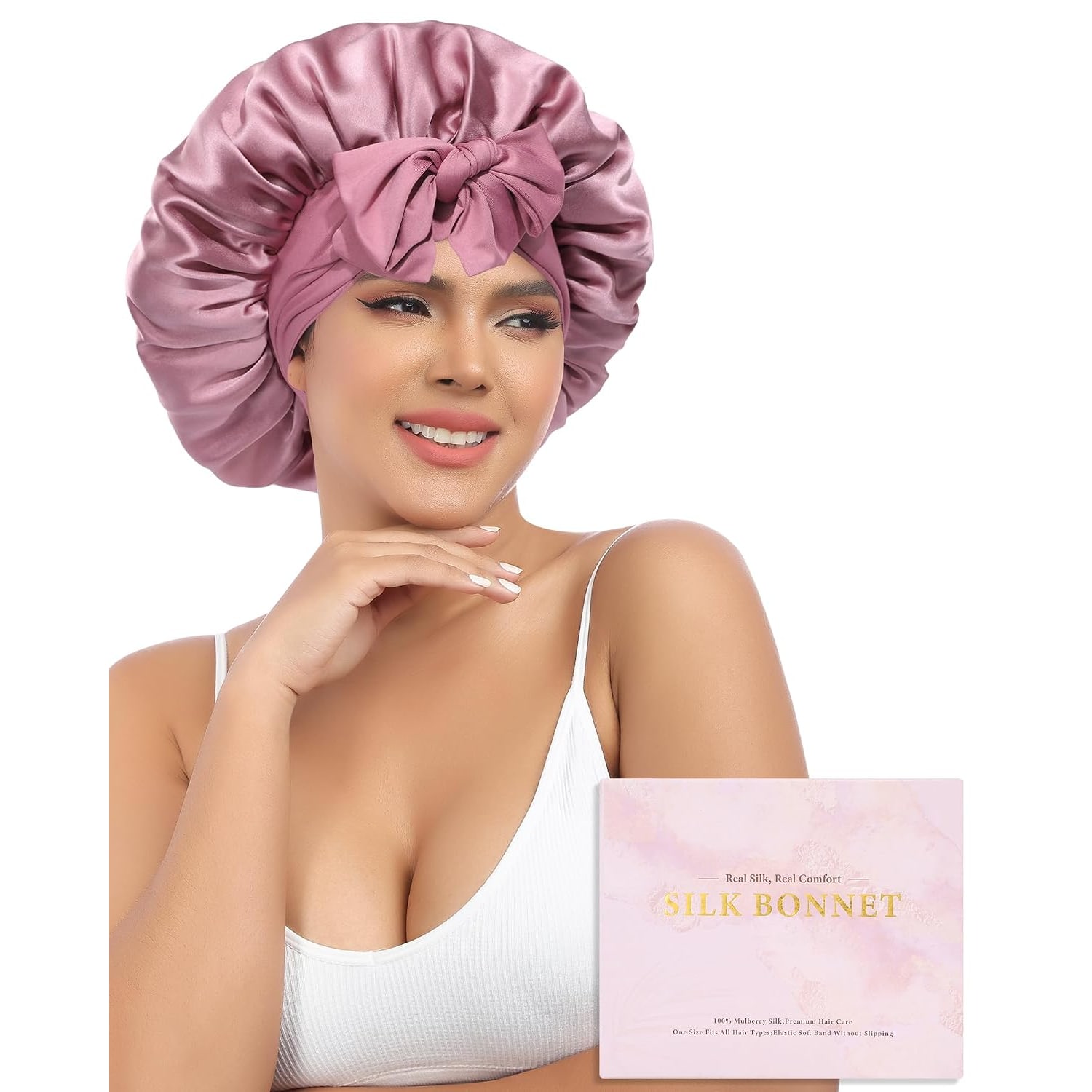
And if you simply like the look, that is a legitimate reason. The dusty rose colour and the front bow are the reason people keep it on after they get up, and a bonnet you wear is better than one in a drawer.
Looking after it
Silk is not fragile, but it does not like heat or harsh detergent.
Hand wash in cool water with a detergent made for silk or wool. Swish it gently, do not scrub or wring, and do not leave it soaking. Rinse until the water runs clear, then lay it in a clean towel and press to get the water out. Hang or lay it flat to air dry, away from direct sun, which fades colour over time.
Skip the tumble dryer entirely. Heat is what breaks silk down, and a hot cycle can shrink and dull it in one go. If you need to press out creases, use the lowest silk setting on your iron with a cloth in between, or just let it hang for a few hours.
Wash it every week or two depending on how much product you use. Oils, creams and dry shampoo all transfer, and letting them build up makes the surface less smooth, which defeats the purpose.
A few honest limits
We will tell you what this is and what it is not. It is a well-made silk cap that reduces friction and holds hair in place. It is not a treatment, and we are not going to claim it does anything to your scalp, your skin or your hair growth. The benefit is mechanical and it is real, but it is modest and it builds up over months rather than showing up overnight.
The maker does not state a brand name, a country of origin or a product weight, so we have left those blank rather than fill them in with guesses. The facts we do have are the silk content, the momme weight, the cap size, the closure and the care instructions.
The short version
Nineteen momme mulberry silk is the right weight for a hair accessory, heavy enough to last and soft enough to be comfortable. The 35cm cap gives curls, braids and volume somewhere to sit instead of flattening them. The adjustable silk tie beats elastic because you control the tension and the knot position, which is why side sleepers get on with it. Hand wash cold, air dry, keep it away from heat, and it will stay smooth for a long time. And because it looks like a turban rather than a night cap, you will probably still be wearing it halfway through the morning.