


The complete guide
How to Choose a Silk Sleep Mask That Actually Stays Put
The problem with most sleep masks
You buy one, you try it, and within a week it is in a drawer. The reasons are almost always the same. Light sneaks in along the bottom edge or beside the nose. The elastic strap digs into the top of your ear and leaves a crease. The mask slides up onto your forehead the first time you roll over, and you wake at dawn with it hanging around your neck.
None of those are small annoyances when the whole point is uninterrupted sleep. A mask that fails at three in the morning is worse than no mask, because now you are awake and fiddling with it.
This is the gap a wider, larger mask is built to fill. More fabric across the face closes the light gaps. A broad band instead of a thin elastic removes the pressure point. Together they turn an eye mask from something you tolerate into something you reach for.
How a wide band mask works
Think of a standard sleep mask as a small oval with a string. It covers the eyes and not much else, and all the holding force runs through a single thin line behind your head.
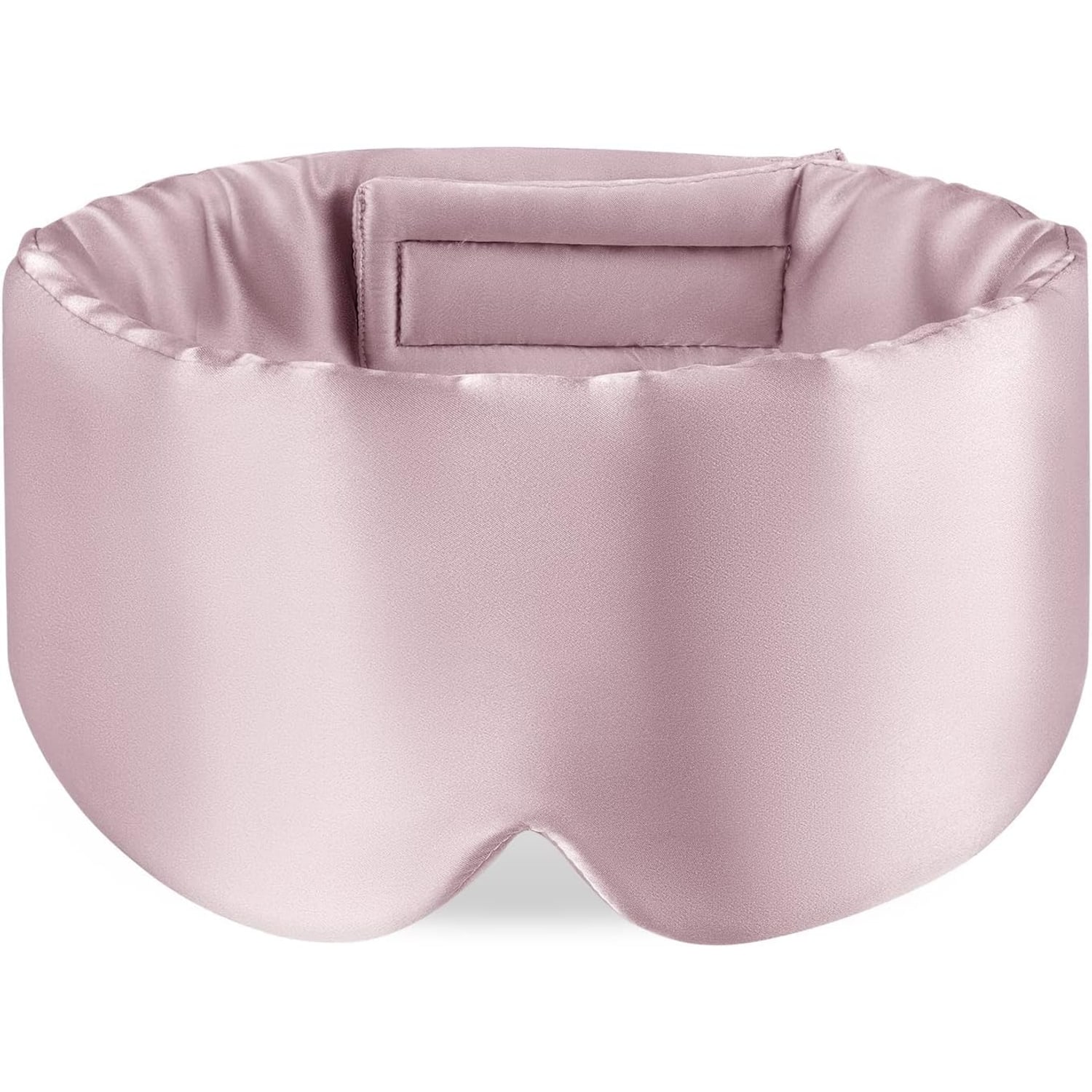
A wide band design changes both halves of that. The eye shade itself is cut larger, extending further across the brow and down toward the upper cheek. That extra surface area is where blackout actually comes from. Light does not usually come straight through a mask, it comes in at the edges, so moving the edges further from the eye solves most of it.
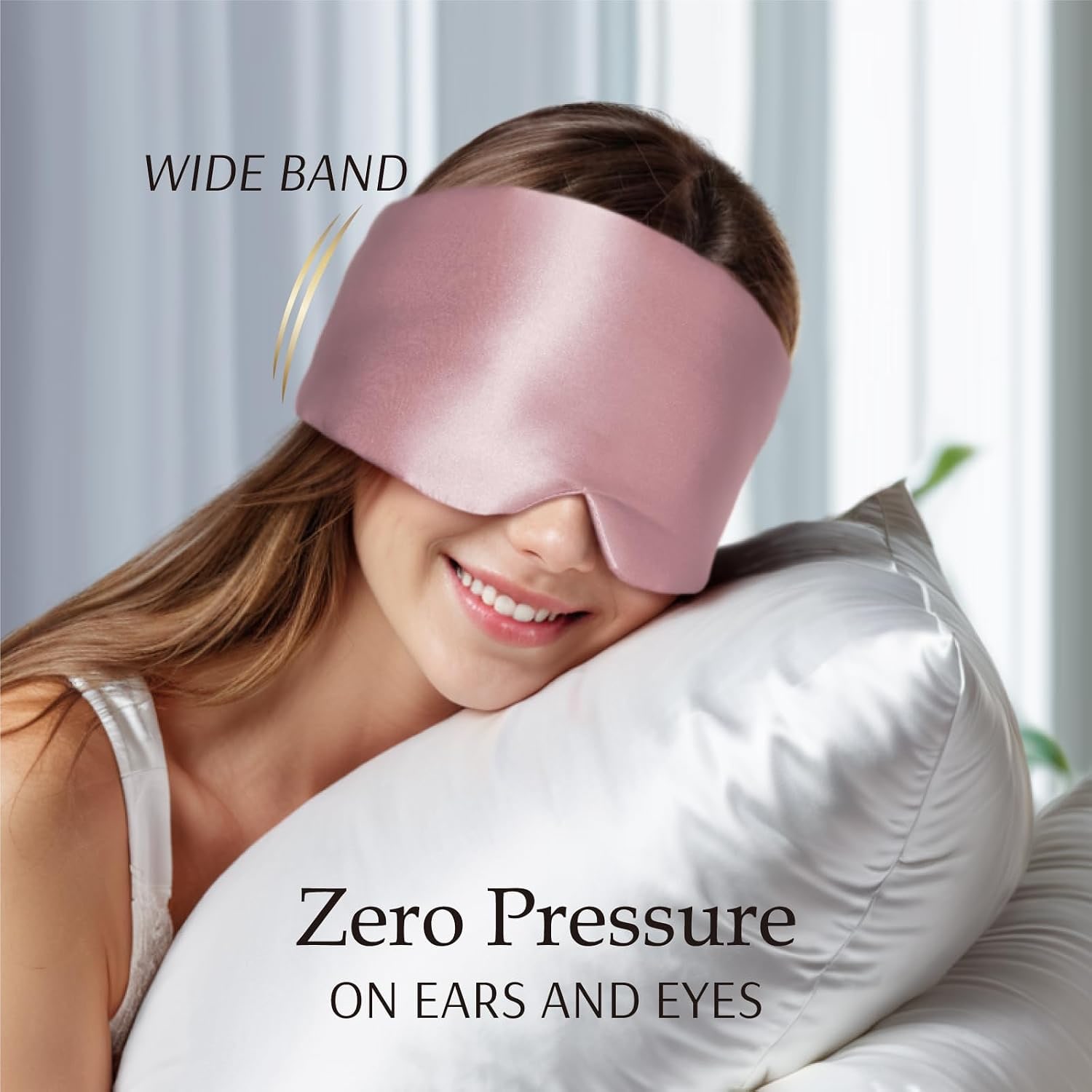
Then the band. Rather than tapering down to a cord, it keeps its width as it runs back from the shade and over the ears. Spread across a few centimetres of fabric, the same holding tension stops being a pinch and becomes a gentle wrap. It is the difference between a shoelace and a soft headband.
There is a side effect that people who use earplugs really appreciate. Because the band covers the ears, it holds plugs in position through the night instead of letting them twist loose. If you sleep near traffic or share a wall with someone who keeps different hours, that pairing does a lot of work.
Why silk, and why momme matters
Silk gets talked about a lot, so it is worth being plain about what it does. It is a smooth fibre. Skin and lashes slide over it with less friction than they do over cotton or polyester. That is a comfort difference you can feel the first night, especially if you are someone who presses a mask into the pillow all night.
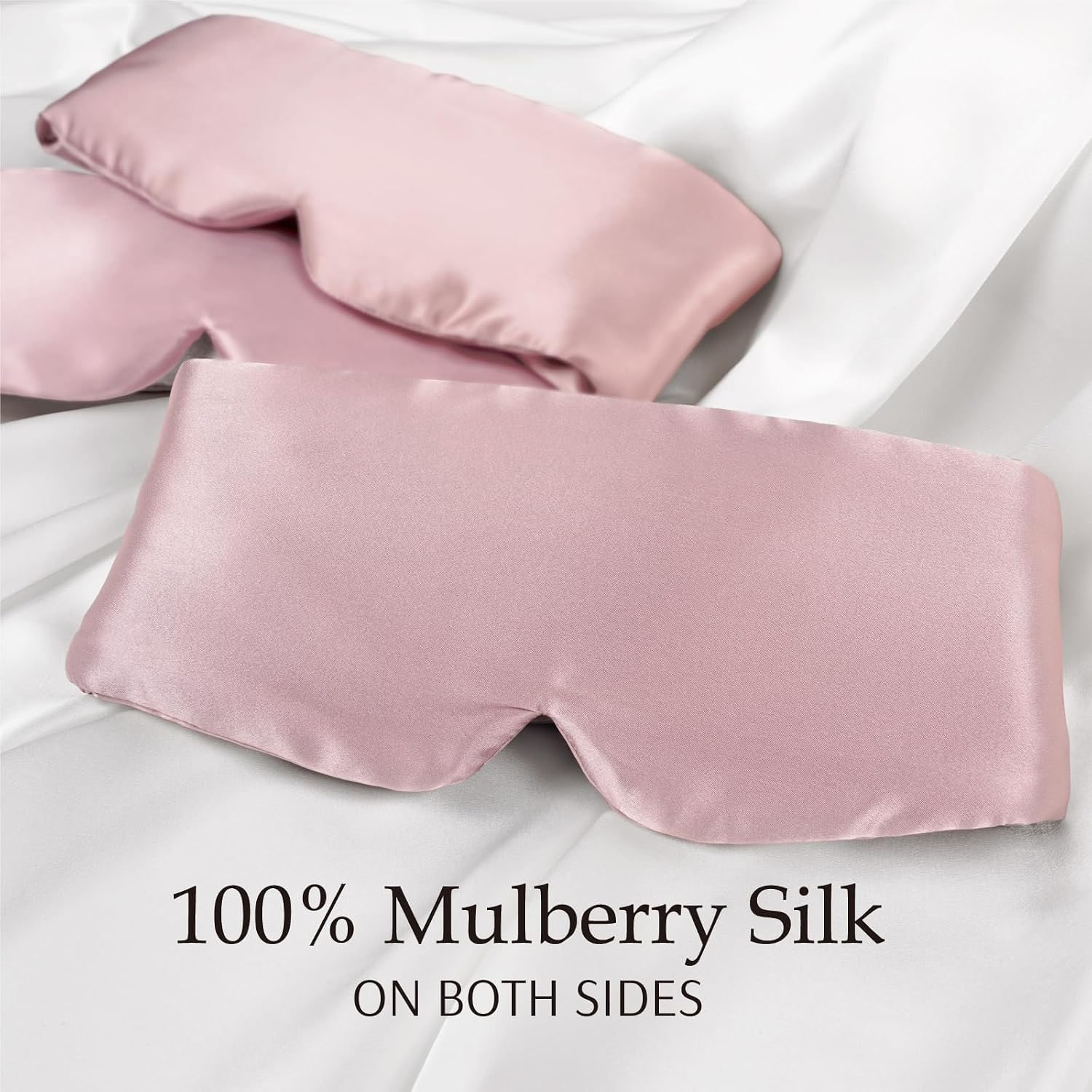
Momme is the measurement that tells you how much silk is actually there. It is a weight figure, and higher numbers mean denser, more substantial fabric. Very light silks sit in the low teens and feel almost like a lining. This mask uses 19 momme on both faces, which is a weight people normally associate with proper silk bedding rather than a thin accessory.
Both sides being silk matters more than it sounds. Plenty of masks use a pretty silk outer and back it with something cheaper, which is the side actually touching your face all night. Here the inner face is the same 19-momme silk as the outer.
If you are comparing options and trying to pick the best mulberry silk eye mask for your money, momme weight and whether the silk runs on both faces are the two spec lines worth checking first.
Who this suits
Side sleepers. This is the clearest case. If you sleep with one ear pressed into a pillow, a thin elastic strap caught in there is uncomfortable within the hour. A wide band spreads the load and covers the ear rather than crossing it.
Daytime sleepers. Shift workers, new parents catching an hour where they can, anyone napping with the afternoon sun coming through. Daylight is far harder to block than a dim bedroom, and a larger shade is the practical answer.
Light-sensitive sleepers. If a standby LED or a streetlight gap in the curtains is enough to keep you up, the extra coverage and the nose cut are doing exactly what you need.
Travellers. It folds flat, weighs almost nothing, and the ear coverage helps on a plane where seat edges and headrests push against a narrow strap.
People who wear earplugs. The band keeps them seated.
Anyone with long lashes. The shade sits further out from the lash line than a small oval does, and silk gives lashes less to catch on.
How to choose the right one
Start with shade size. If your complaint is light, size is the lever. A mask that only covers the eyes will always leak at the edges. Look for one described as larger than standard, the way this one is.
Look at the band. Thin elastic is cheap to make and uncomfortable to wear. A broad band costs more fabric and solves the pressure problem. If you have ever woken with a strap mark behind your ear, this is the feature to prioritise.
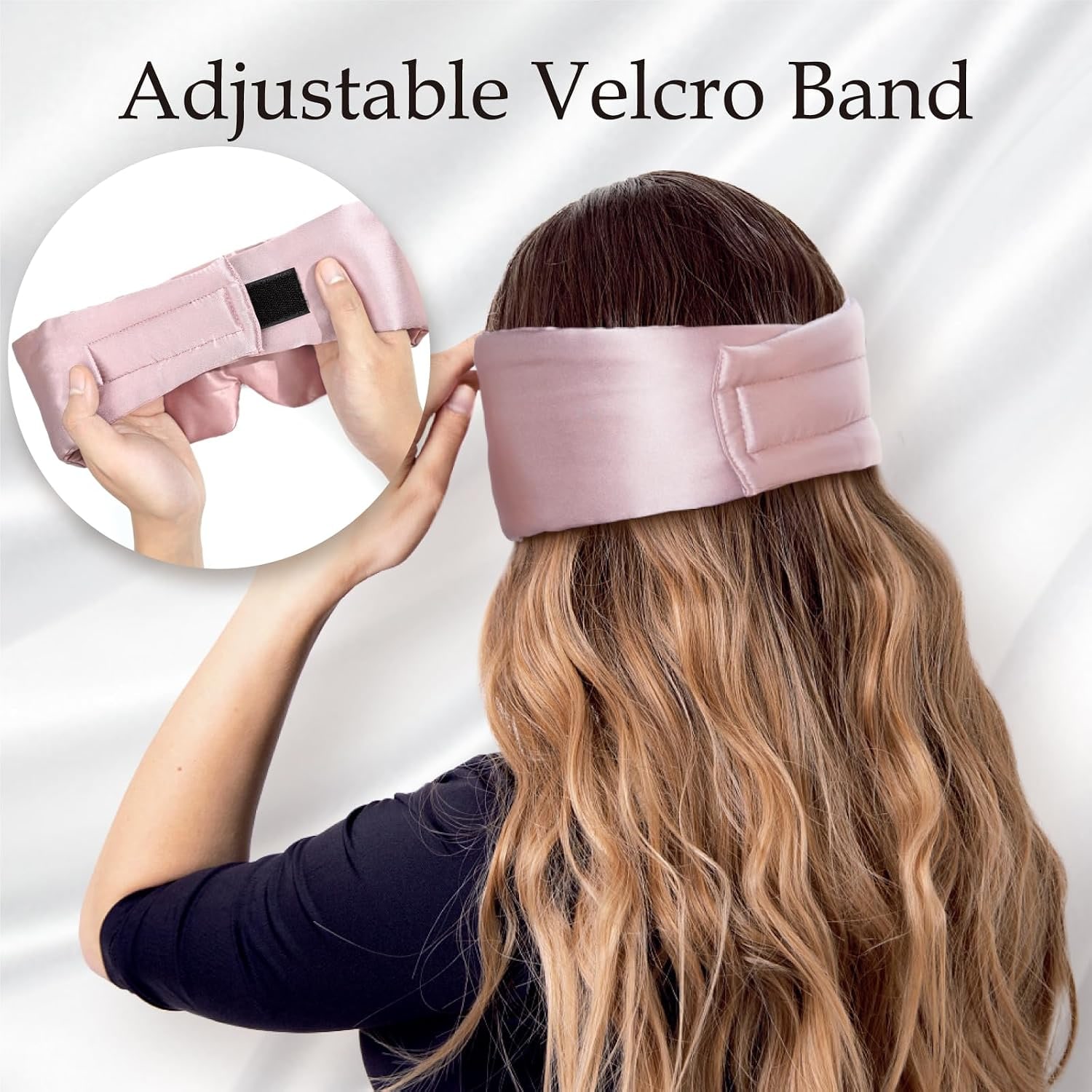
Check the closure. An adjustable closure means you set the fit. Fixed elastic means you get whatever the pattern maker decided. Adjustable is almost always better, particularly if your head is at either end of the average range.
Check for a nose cut. The shaped notch at the bridge is a small detail with a big effect. Without it, the fabric bridges over the nose and opens a gap on each cheek.
Then look at the silk. Mulberry silk, stated momme weight, and silk on both faces. Those three together tell you more than any amount of descriptive language.
If you are shopping for the best blackout eye mask rather than just a pretty one, the first four points matter more than the fifth. Silk is about feel. Size, band, closure and nose cut are about whether it actually works.
Fitting it the first night
Do not tighten it to the maximum straight away. That is the most common mistake, and it leads to pressure around the temples and a mask you take off at two in the morning.
Instead, put it on sitting up, with the closure fairly loose. Lie down in your usual position. If you can see light, tighten a notch and check again. Repeat until the light stops. Most people land somewhere noticeably looser than they expected, because the extra fabric area is doing the sealing rather than the tension.
Give it two or three nights. Any new thing against your face feels present at first, and then stops registering.
Looking after it
Silk is not fragile, it just does not like heat and harsh chemicals.
Hand wash in cool water with a mild detergent made for delicates. Swirl it rather than scrubbing it. Do not bleach, do not soak it for long stretches, and do not wring it out. Press the water out between a folded towel, then lay it flat to dry somewhere out of direct sun and away from any heat source.
If you machine wash, use a mesh bag, a cold delicates cycle, and skip the spin. It will be fine, it just will not last as long as hand washing.
Wash it every week or two with nightly use, more often if you apply creams before bed. Let it dry completely between uses. If it needs pressing, the lowest iron setting on the reverse side is enough, though laying it flat while slightly damp usually does the job on its own.
Treat the closure gently. Undo it rather than dragging the mask off over your head, and it will keep its adjustment for far longer.
The short version
If small masks keep failing you, the fix is usually more fabric and a wider band. This one gives you both, in 19-momme mulberry silk on both faces, with an adjustable closure and a nose cut so you can actually set the fit instead of hoping.
It suits side sleepers, daytime sleepers, earplug users and anyone whose room is never quite as dark as it should be. Wash it by hand, dry it flat, keep it out of the sun, and it will stay soft.
The brand, origin and finished measurements are not stated by the maker. Everything else you need to judge it, the silk type, the weight, the construction and the fit features, is on the page above.