
The complete guide
How to Choose a Silk Sleep Mask That Actually Blocks the Light
The problem with most bedrooms
Very few bedrooms are truly dark. There is a street lamp outside the curtain, a router blinking green on a shelf, a phone charging on the bedside table, maybe a partner who reads later than you do. None of it feels dramatic at the time. It just sits there, at the edge of your eyelids, while you try to drift off.
Then there is morning. Depending on where you live and which way your windows face, the light can arrive well before you want it to. Blackout curtains help, but they are expensive, they only fix one room, and they do nothing at all when you are in a hotel or on a plane.
A sleep mask is the small, portable answer. It travels with you, it costs a fraction of re-curtaining a room, and it works in any bed, anywhere. The catch is that a lot of masks are not very good, and it is worth knowing why before you buy one.
Where cheap masks go wrong
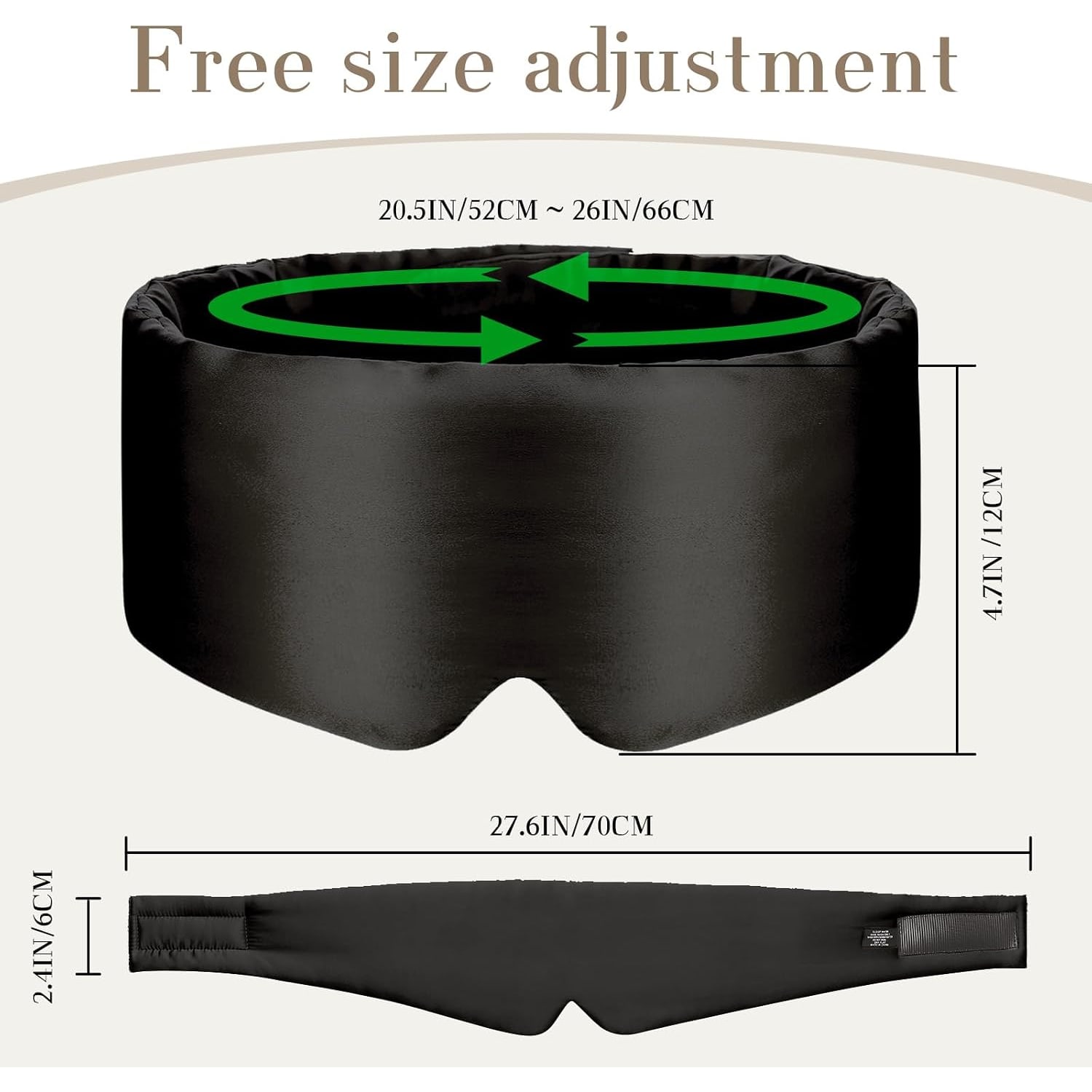
The first failure is coverage. Many masks are cut small to save fabric. They sit right on the eye sockets and leave gaps at the bridge of the nose and out towards the temples. Light finds those gaps, which is exactly what you were trying to avoid.
The second failure is the strap. A thin elastic cord is cheap to sew in, but it concentrates all the holding force into one narrow line across the back of your head. Wear it for eight hours and you will feel it. You also wake up with a crease in your hair and sometimes a tender patch behind the ear.
The third failure is the fabric. Rough weaves drag on skin and lashes every time you turn over. Thick foam can feel hot and bulky, and it tends to push back against the pillow when you sleep on your side.
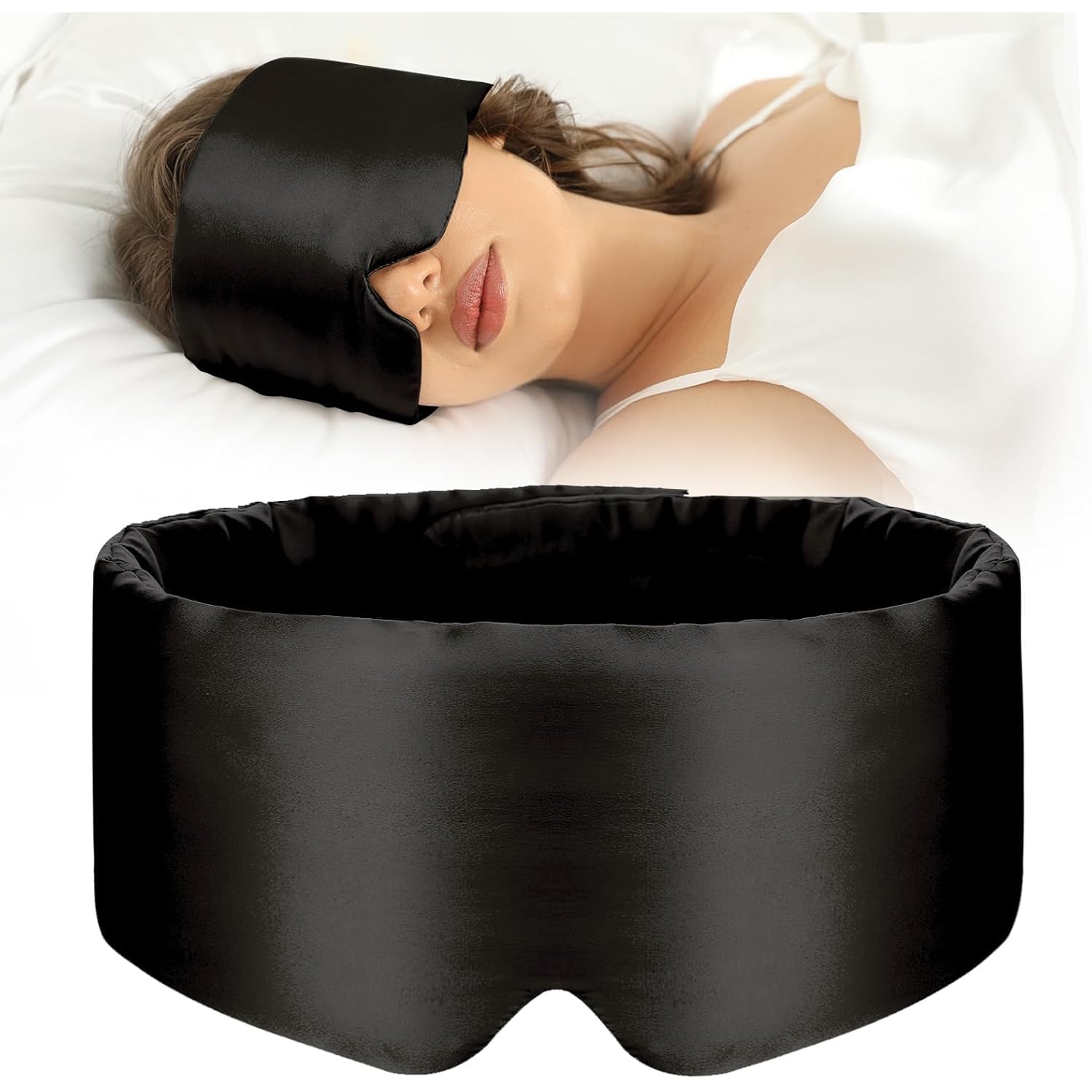
This mask is built to avoid all three. It is cut large, the band is wide, and the face is 100% mulberry silk.
Why silk, specifically
Silk gets talked about a lot, so it is worth being plain about what it does and does not do. What it does is feel smooth. The filaments are long and even, which gives the finished fabric a slick surface. Skin and hair slide over it with less friction than they do over a typical cotton weave. That is why people reach for silk around the face at night.
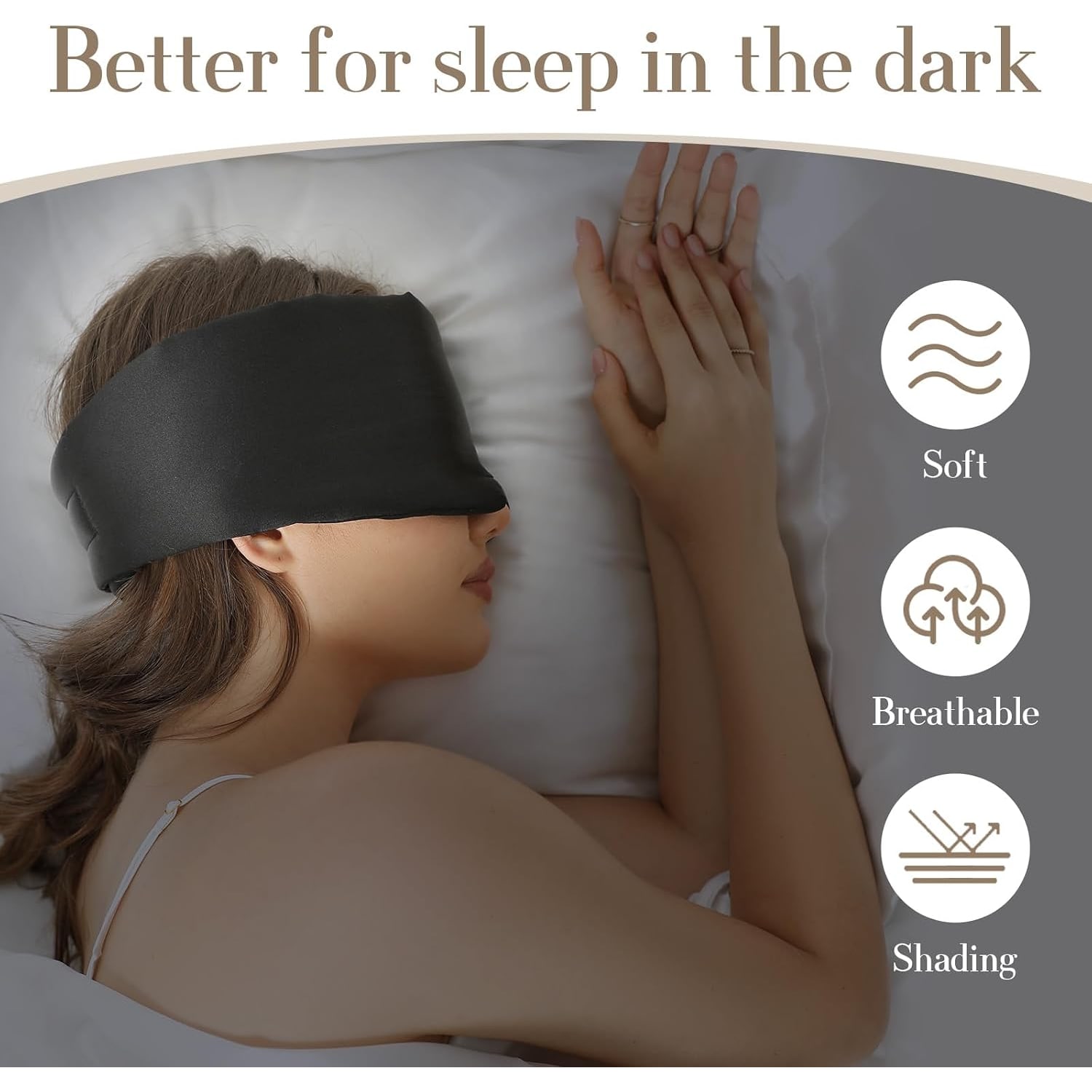
It also feels light. A silk mask sits on your face with barely any weight to it, and it does not trap heat the way a padded foam shell can. On a warm night that matters.
Mulberry silk is the grade used in most quality silk bedding and sleepwear. It comes from silkworms fed on mulberry leaves, which produces longer, more uniform filaments than other silk types. The maker lists this mask as 100% mulberry silk.
What a silk mask does not do is change your skin, your hair or your health. We are not going to tell you otherwise. It is a comfortable, smooth fabric that blocks light. That is the whole job, and it is a useful one.
Why black, with no print
Colour matters more than people expect. A pale or patterned mask can glow faintly when light hits it, because light fabric passes some of it through and reflects some back. Printed designs often use lighter inks that do the same thing.
Solid black absorbs. It is the simplest reason a blackout silk eye mask is almost always dark, and it is why this one is plain black with no pattern at all. Nothing on the face of the mask gives light a route in.
Black also hides the small marks that any mask picks up over time, from night creams to a stray dab of mascara. It stays looking tidy with far less fuss than a cream or pastel mask.
The wide band, and why it is the real upgrade
If you only compare two masks on one feature, make it the band.
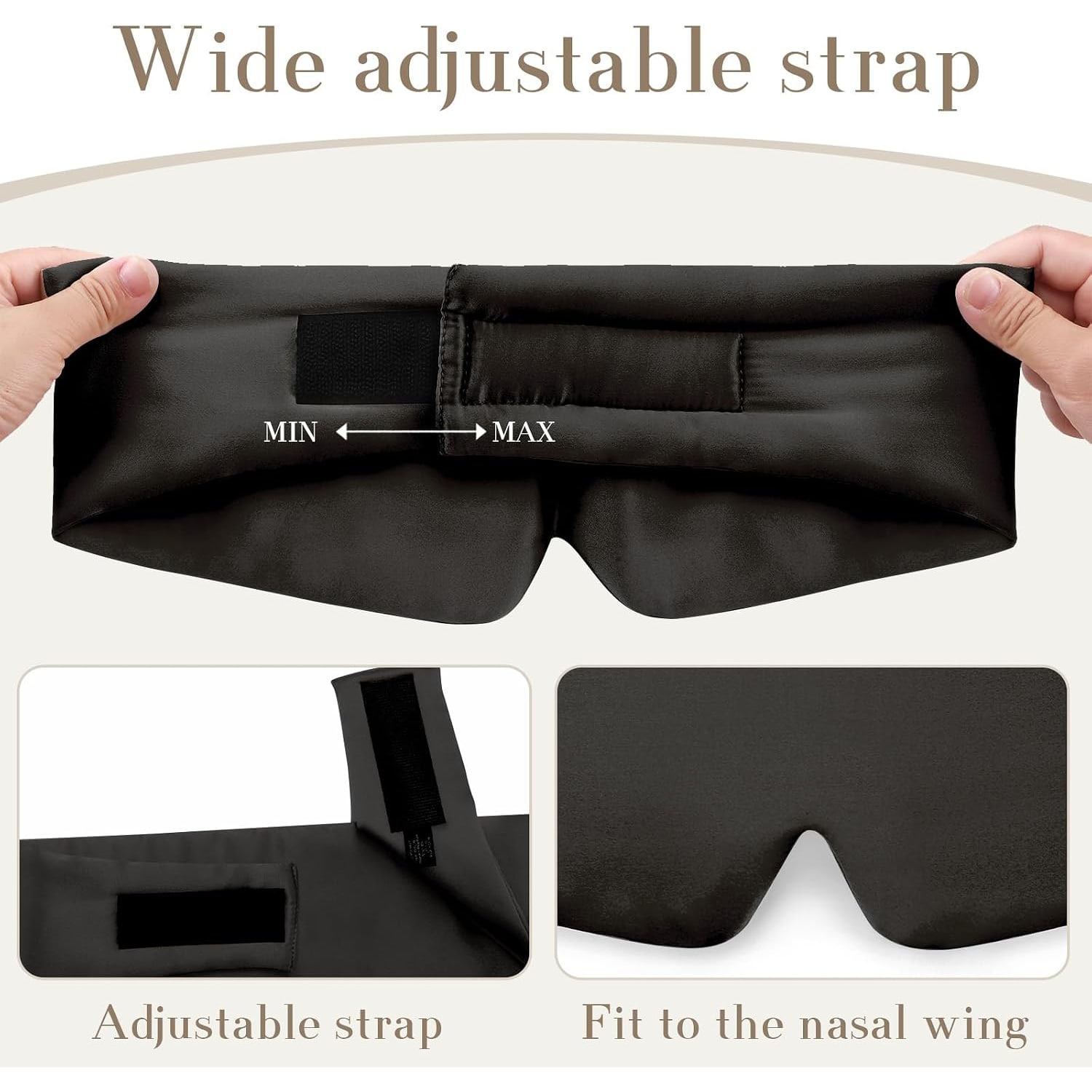
A broad band spreads the holding tension across a wider area of the back of the head. The same snugness, distributed over more surface, feels like less pressure. You stop noticing it, which is the point. You will not wake up to a deep dent in your hair either.
The fastening here is hook and loop, and that is a genuinely practical choice. Elastic stretches out over months. A buckle has fixed holes, so your ideal tension often falls between two of them. Hook and loop is infinitely adjustable across its range. You set it once, and if you want it a touch looser for a nap or a little firmer for a flight, that is a two-second change.
One practical tip. Always close the fastening when you are not wearing the mask. Loose hook-and-loop tape left open in a drawer or a bag will find something to grab onto, and silk is not the fabric you want it grabbing.
Who it suits
Side sleepers do well with a soft, unstructured mask like this. There is no rigid frame or deep cup to push back against the pillow, so it flattens and stays put as you turn.
Shift workers and anyone who sleeps during daylight hours will get the most obvious benefit. Daytime light is harder to shut out than night-time light, and a large, solid black mask with a snug band makes a real difference to a 2pm sleep.
Travellers are the other obvious group. It folds flat, weighs almost nothing, and takes up less room in a bag than a pair of socks. That packability is what people are really after when they go looking for the best packable eye mask.
If you are shopping for someone else, it is an easy gift. There is no sizing to get wrong, black goes with everything, and most people never get round to buying one for themselves.
Getting the fit right
Put the mask on before bed rather than in the dark. Sit up, settle the silk over your eyes so the top edge sits just under your brow line, then bring the band round and fasten it at the side of your head rather than straight across the back. That keeps the fastening away from where you rest on the pillow.
Tighten slowly. The instinct is to pull it firm so no light gets in, but a mask that is too tight will press on your eyes and you will take it off at 3am. Go snug, not tight, then test by looking around the room. If light comes in at the nose, nudge the mask down slightly rather than yanking the band in.
Give it a few nights. Most people who say they cannot sleep in a mask tried one once, had it too tight, and gave up. The adjustment usually takes under a week.
Looking after it
Care is short. Hand wash only, in cool water, with a mild detergent made for delicates. Swish gently rather than scrubbing. Rinse, then press the water out between two towels instead of wringing, because twisting is what breaks silk fibres.
Dry it flat, away from direct sun and away from any heat source. Reshape the band while it is damp so it dries straight. Skip the dryer entirely, skip bleach, and skip fabric softener, which leaves residue on a fabric that is already smooth.
Close the hook and loop before washing so it does not snag the silk in the basin.
Washed this way, every week or two, a silk mask holds its hand and its colour for a long stretch.
The short version
If your room is not as dark as you would like, a mask is the cheapest and most portable fix there is. The two things that make one worth owning are coverage and the band. This one is cut large, so there is less chance of light sneaking in at the edges, and the wide hook-and-loop band spreads the pressure instead of digging in.
The silk is the comfort part. It is smooth, light and cool against the face, and it does not tug when you turn over.
Set the tension gently, wash it by hand, keep the fastening closed, and it will do its one job quietly for a long time.